
Summary
This smart home buying guide recommends evaluating compatibility, scalability, security, networking, installation requirements, and long-term support rather than focusing solely on individual devices. A well-designed smart home should integrate lighting, climate control, security, entertainment, motorized curtains, and energy management into one platform that can expand over time. Smart home buying should depend on choosing a reliable automation system, and working with experienced professionals helps avoid compatibility issues and protect your investment.
Quick Answer
According to this smart home buying guide, you should consider your long-term goals rather than just today’s needs. Think about which parts of your home you want to automate, whether the system can expand in the future, how it handles security and privacy, whether it works during internet outages, and how easily different devices integrate. A professionally planned smart home should grow with your lifestyle while remaining simple, reliable, and easy to use. Smart home buying should always focus on long-term reliability and future expansion.
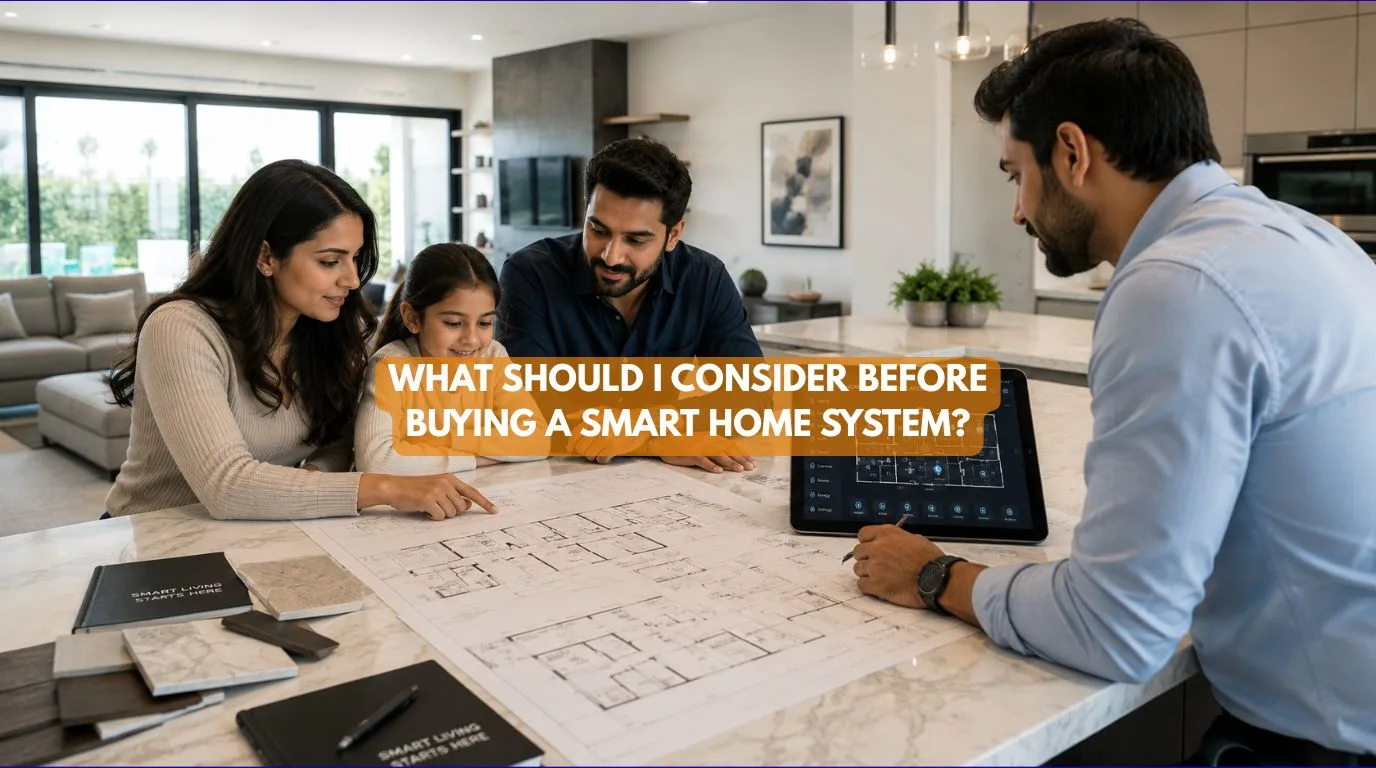
What Should I Consider Before Buying a Smart Home System?
Buying a smart home system is exciting. You imagine controlling:
- Lights
- Air conditioning
- Curtains
- Security cameras
- Door locks
- Home theatre
- Music
- Appliances
From a single app or with a simple voice command. But smart home buying can go downhill if you choose the wrong system, and this can quickly become frustrating.
Many homeowners end up with:
- Multiple mobile apps
- Devices that don’t work together
- Poor Wi-Fi coverage
- Limited automation
- Expensive upgrades later
At Techtastic, we’ve helped countless homeowners upgrade from disconnected smart gadgets to fully integrated automation systems. The biggest lesson we’ve learned: Successful smart home buying starts with proper planning rather than simply choosing the latest gadgets.
Here’s your 2026 smart home buying guide and what you should consider before making your investment.
1. Start With Your Lifestyle, Not the Technology
Before choosing products, ask yourself:
- What problems do I want to solve?
- Which daily routines could be automated?
- Which rooms matter most?
- Do I travel frequently?
- Do I want convenience, security, energy savings, or all three?
Technology should support your lifestyle and not dictate it.
2. Decide What You Want to Automate
Smart home buying becomes much easier when you identify your priorities before comparing products. Not every homeowner needs the same features. Some prioritize smart lighting, while others prefer climate control.
Families often choose:
- Security
- Video door phones
- Smart locks
Luxury homes may include:
- Motorized curtains
- Home theatres
- Multi-room audio
- Energy management
Create a priority list before choosing a system.
3. Choose a Scalable System
One of the biggest mistakes homeowners make is buying a system that’s difficult to expand.
Today you may want:
- Smart lighting
Next year you might add:
- Curtains
- Security
- HVAC
- Solar integration
- EV charging
Choose a platform that grows with your needs.
4. Check Device Compatibility
Not every smart device works with every platform.
Before buying, confirm compatibility with:
- Lighting
- Air conditioners
- Smart locks
- Curtains
- Security systems
- Voice assistants
A unified ecosystem is much easier to manage than multiple disconnected apps.
5. Think Beyond Wi-Fi
Many homeowners assume every smart home depends entirely on Wi-Fi.
That’s not always true.
Wi-Fi Systems
Suitable for:
- Small apartments
- Individual devices
- Entry-level automation
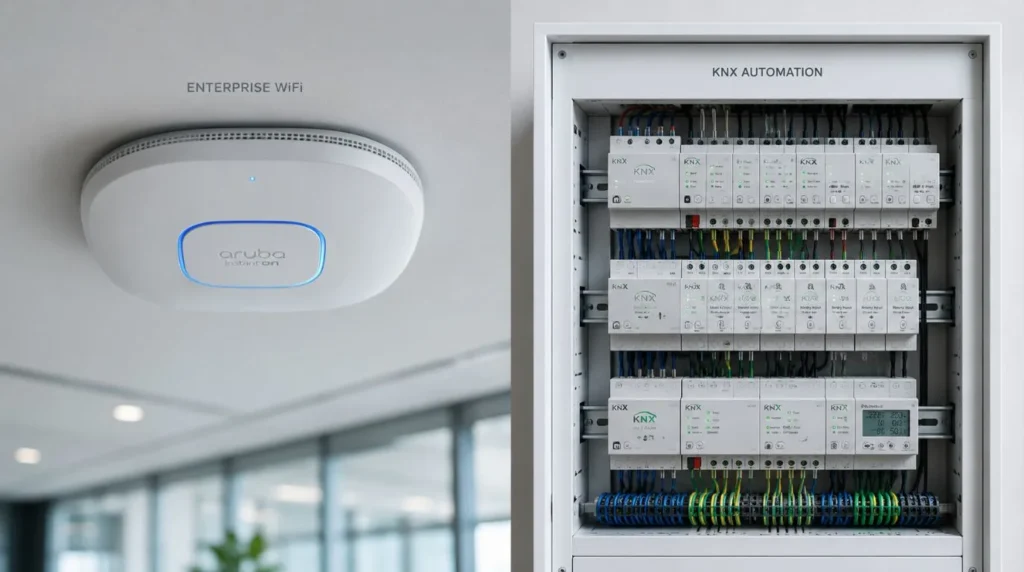
Professional Systems Like KNX
Offer:
- Local operation
- Greater reliability
- Better scalability
- Dedicated automation networks
Understanding this difference helps you choose the right solution.
6. Consider Security and Privacy
Your smart home controls important parts of your property.
Choose systems that offer:
- Secure user authentication
- Encrypted communication
- Local operation where possible
- Regular software updates
Security should be part of the design and not an afterthought.
7. Evaluate Your Home’s Network
Even the smartest devices depend on reliable connectivity. Reliable networking is often overlooked during smart home buying, but it forms the foundation of every connected home.
Consider:
- Wi-Fi coverage
- Internet speed
- Structured cabling
- Router quality
- Access points
A weak network often causes smart home problems, not the devices themselves.
8. Think About Future Maintenance
Technology evolves.
Ask:
- Can software be updated?
- Will replacement parts be available?
- Is technical support offered?
- Can new devices be added later?
Future support is just as important as the initial installation.
9. Consider New Construction vs Existing Home
The installation approach varies.
New Homes
Advantages include:
- Concealed wiring
- Better infrastructure planning
- Easier integration
Existing Homes
Retrofit solutions minimize disruption and still offer excellent automation opportunities.
Planning around your home’s construction stage can save both time and money.
10. Don’t Focus Only on Price
The cheapest smart home isn’t always the best value.
Instead, consider:
- Reliability
- Ease of use
- Expandability
- Support
- Integration
- Long-term ownership costs
A slightly higher investment today may prevent costly upgrades later.
Wi-Fi Smart Home vs KNX Home Automation
One of the most important decisions in any smart home buying guide is choosing the right automation platform.
| Feature | Wi-Fi Smart Home | KNX Home Automation |
|---|---|---|
| Initial cost | Lower | Higher |
| Scalability | Moderate | Excellent |
| Whole-home integration | Limited | Outstanding |
| Local operation | Limited | Yes |
| Long-term reliability | Good | Excellent |
| New construction suitability | Good | Excellent |
| Future expansion | Moderate | Outstanding |
Choose based on your long-term goals rather than short-term savings.
Questions Every Smart Home Buying Guide Should Answer
These questions can help simplify smart home buying and prevent expensive mistakes later.
Before making a decision, ask :
- Can the system expand in the future?
- Does it continue working if the internet fails?
- How secure is the platform?
- Which devices are compatible?
- How many mobile apps will I need?
- What support is available after installation?
- How often is software updated?
- Can the system integrate with solar panels or EV charging later?
These questions help you avoid expensive surprises.
Common Buying Mistakes
Buying Individual Devices First
This often creates compatibility problems.
Ignoring Networking
Poor Wi-Fi affects the entire smart home.
Choosing Too Many Brands
Multiple ecosystems complicate everyday use.
Not Planning for Expansion
Most homeowners add automation over time.
Hiring General Electricians Instead of Smart Home Specialists
Automation requires planning, programming, networking, and integration, and not just electrical work.
A smart home buying guide can help you avoid costly mistakes and choose the right automation platform.
Why It Matters for Modern Homes
A smart home is no longer just a luxury. It’s becoming an expected feature in modern living. Following a smart home buying guide helps homeowners avoid expensive mistakes while planning for long-term comfort, security, and scalability.
The right system can improve:
- Convenience
- Comfort
- Security
- Energy efficiency
- Property value
Choosing wisely from the beginning helps ensure your home remains useful and relevant for many years.
Our Perspective at Techtastic
At Techtastic, we believe homeowners shouldn’t buy products; rather, they should invest in a smart home strategy. This smart home buying guide clearly conveys how every project begins with understanding how our clients live today and how their needs may evolve in the future.
Only then do we recommend technologies that integrate lighting, climate control, motorized curtains, security, entertainment, networking, and energy management into one cohesive ecosystem.
For us, success isn’t measured by the number of smart devices installed. It’s measured by how effortless your home feels every single day.
Collaboration Opportunities for Developers, Architects & Interior Designers
The smartest homes are planned before construction begins.
At Techtastic, we collaborate with:
- Architects
- Interior designers
- Residential developers
- Luxury home builders
- Hospitality consultants
- Commercial project planners
Smart Home Infrastructure
Prepare homes for long-term automation.
Lighting & Interior Integration
Blend technology with design.
KNX System Planning
Create scalable, future-ready automation.
Structured Networking
Support reliable connected living.
Luxury Residential Projects
Deliver premium smart home experiences.
Future-Ready Developments
Build homes prepared for evolving technologies.
Early planning reduces installation costs, simplifies future upgrades, and delivers a significantly better homeowner experience.
Key Takeaways
- Start with your lifestyle and automation goals rather than individual gadgets.
- Choose a scalable system that can grow with your future needs.
- Verify compatibility between all smart devices.
- Consider security, privacy, and local operation.
- Invest in reliable networking infrastructure.
- Focus on long-term value instead of only upfront cost.
- Use a smart home buying guide to plan wisely
- Work with experienced smart home professionals to design an integrated solution.
Frequently Asked Questions
1. What should I consider before buying a smart home system?
A. Consider your lifestyle, automation goals, compatibility, scalability, security, networking, installation requirements, and future expansion plans before making a decision. A smart home guide can help you with this.
2. Which smart home system is best?
A. The best system depends on your home’s size, budget, and long-term goals. Professionally designed platforms like KNX are ideal for whole-home automation, while Wi-Fi systems suit smaller projects.
3. Can I expand my smart home later?
A. Yes. Choosing a scalable platform allows you to add lighting, security, climate control, entertainment, and other features over time.
4. Does a smart home need Wi-Fi?
A. Many consumer systems rely on Wi-Fi, but professional platforms like KNX operate on dedicated automation networks and continue working locally.
5. Is professional installation necessary?
A. For integrated smart home systems, professional installation improves reliability, security, and long-term performance.
6. Will a smart home increase property value?
A. Modern automation features can make a home more attractive to buyers, particularly in premium residential markets.
7. How important is networking in a smart home?
A. Reliable networking is essential because it supports communication between connected devices and automation systems.
8. Should I choose KNX or a Wi-Fi smart home?
A. If you want whole-home integration, long-term reliability, and future scalability, KNX is often the better choice. Wi-Fi systems are ideal for smaller or entry-level projects.
Conclusion
Buying a smart home system is about much more than choosing connected devices; it’s about creating a home that works intelligently for years to come. This smart home buying guide highlights the importance of considering factors such as scalability, compatibility, security, networking, and future expansion before you invest. By planning, you can avoid common mistakes and build a system that grows with your lifestyle instead of limiting it. A well-planned smart home should simplify everyday living, improve comfort, enhance security, and deliver long-term value rather than becoming a collection of disconnected gadgets.
At Techtastic, we take a consultative approach to every smart home project. Whether you’re automating a new home, upgrading an existing property, or simply exploring your options, we help homeowners, architects, and developers design future-ready automation systems that seamlessly integrate lighting, climate control, security, motorized curtains, entertainment, and energy management.
📞 Call/WhatsApp: 9769145145
📍 Our Operational Hubs: Navi Mumbai | Nashik | Lonavla | Sangli
Following a smart home buying guide and working with experienced professionals ensures your smart home becomes a lasting investment in convenience, efficiency, and modern living.
Looking for the best features to start with? Check out our practical guide on the KNX Troubleshooting Guide: Fix Common KNX Problems (2026) to plan a system that can be fixed effortlessly.