
Summary
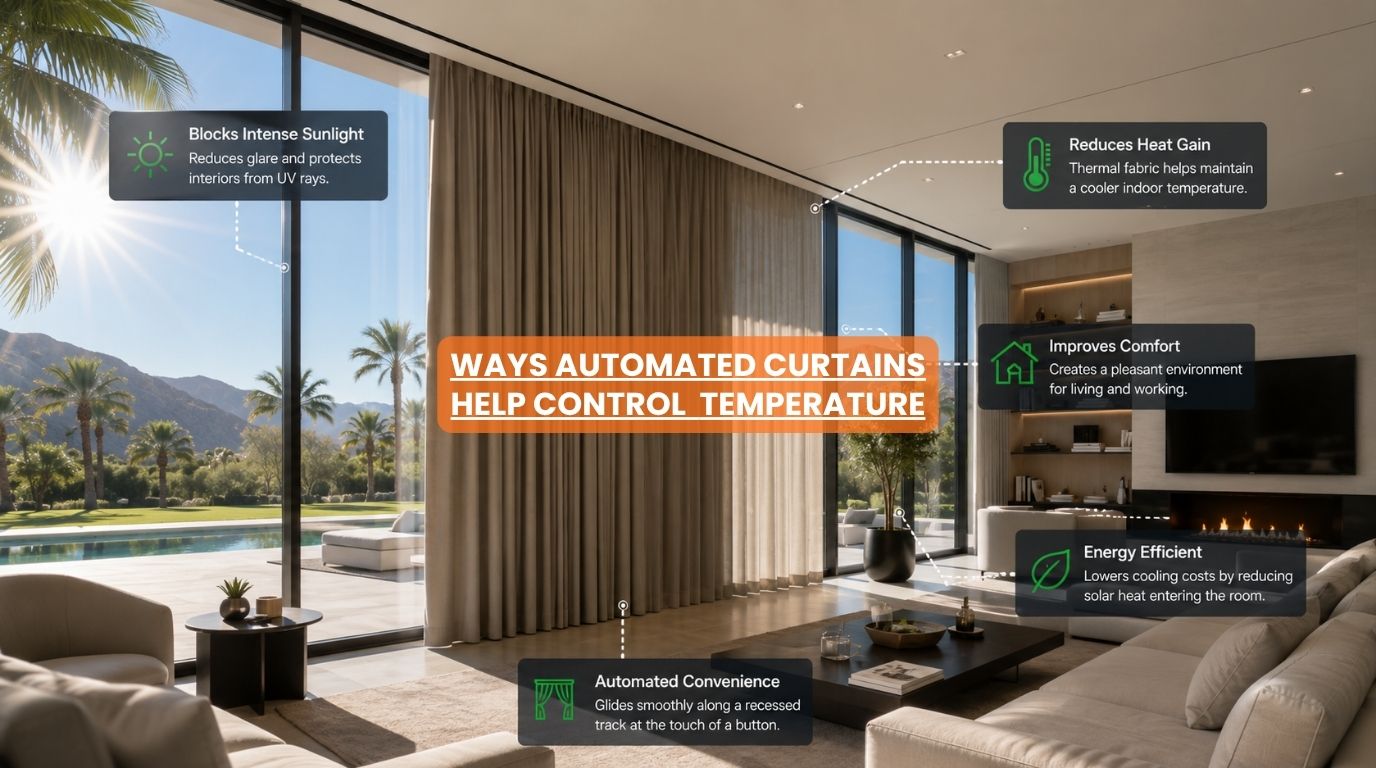
Automated curtains help regulate indoor temperatures by automatically responding to sunlight, heat, and schedules. By closing during peak sunlight hours and opening during cooler periods, they reduce solar heat gain, lower air conditioning demand, and improve energy efficiency. When integrated with smart home systems, automated curtains can work alongside climate control systems to maintain consistent indoor temperatures throughout the day.
Introduction
Most homeowners think of automated curtains as a luxury feature. They imagine:
- One-touch operation
- Voice control
- Automated schedules
- Smart home integration
However, one of their most valuable benefits often goes unnoticed: Temperature control.
At Techtastic, many homeowners initially choose automated curtains for convenience but quickly discover that they also help maintain a more comfortable indoor environment.
In homes with:
- Large windows
- Floor-to-ceiling glass
- West-facing rooms
- Sun-exposed living spaces
Window coverings can significantly influence indoor temperatures. Let’s explore how.
Quick Answer
Automated curtains help control indoor temperatures by automatically managing sunlight and heat entering the home. They can close during the hottest parts of the day to reduce solar heat gain and open during cooler periods to allow natural light and warmth. This reduces the workload on air conditioning systems, improves energy efficiency, and creates a more comfortable indoor environment.
Why Windows Affect Indoor Temperature
Glass is one of the largest sources of heat gain in modern homes. Sunlight entering through windows can:
- Raise room temperatures
- Increase glare
- Make spaces uncomfortable
- Increase air conditioning usage
Large glass surfaces often contribute to:
- Hot living rooms
- Warm bedrooms
- Uneven temperatures
Managing sunlight becomes an important part of climate control.
How Automated Curtains Reduce Heat Gain
The primary way automated curtains help is by blocking direct sunlight. During the hottest parts of the day, curtains can automatically close.
This helps:
- Reduce solar heat entering the room.
- Lower indoor temperatures.
- Minimize cooling requirements.
Even a few degrees of temperature reduction can improve comfort significantly.
Automatic Sunlight Management
Unlike manual curtains, motorized curtains can respond automatically. Examples include:
Morning
Curtains open. Natural light enters.
Afternoon
Curtains close during intense sunlight. Heat gain decreases.
Evening
Curtains reopen. The room cools naturally. This daily adjustment improves thermal comfort.
Motorized Curtains and Air Conditioning
Air conditioning systems work harder when rooms absorb excessive heat.
Motorized curtains help by:
- Reducing direct sunlight.
- Lowering indoor heat buildup.
- Supporting cooling systems.
This can result in:
- Improved comfort
- Reduced energy consumption
- More consistent temperatures
The air conditioner doesn’t need to work as hard.
Best Rooms for Temperature Control
Some rooms benefit more than others.
Living Rooms
Large windows often create significant heat gain.
Bedrooms
Temperature control improves sleep comfort.
Home Offices
Reduced glare and heat improve productivity.
West-Facing Rooms
Particularly vulnerable to afternoon heat.
Glass Facades
Require effective daylight management. Motorized curtains can make these spaces far more comfortable.
Summer Benefits
During warmer months:
- Curtains close during peak heat.
- Solar gain decreases.
- Cooling systems work less.
Benefits include:
✅ Reduced heat buildup
✅ Improved comfort
✅ Better energy efficiency
Winter Benefits
Motorized curtains also help during colder periods.
At night:
- Curtains close.
- Heat loss through windows decreases.
- Rooms retain warmth longer.
This can improve:
- Comfort
- Heating efficiency
- Energy savings
Smart Home Integration
Modern motorized curtains can integrate with:
- KNX home automation
- Smart thermostats
- Climate systems
- Weather sensors
Examples include:
Room Gets Too Warm
Curtains close automatically.
Outdoor Temperature Drops
Curtains close to retain heat.
Morning Sunlight
Curtains open gradually.
Automation makes temperature management effortless.
Motorized Curtains vs Manual Curtains
| Feature | Manual Curtains | Motorized Curtains |
| Scheduled operation | No | Yes |
| Sunlight response | Manual | Automatic |
| Climate integration | No | Yes |
| Energy optimization | Limited | Excellent |
| Temperature management | User dependent | Automated |
Automation allows more consistent control.
Best Curtain Fabrics for Temperature Control
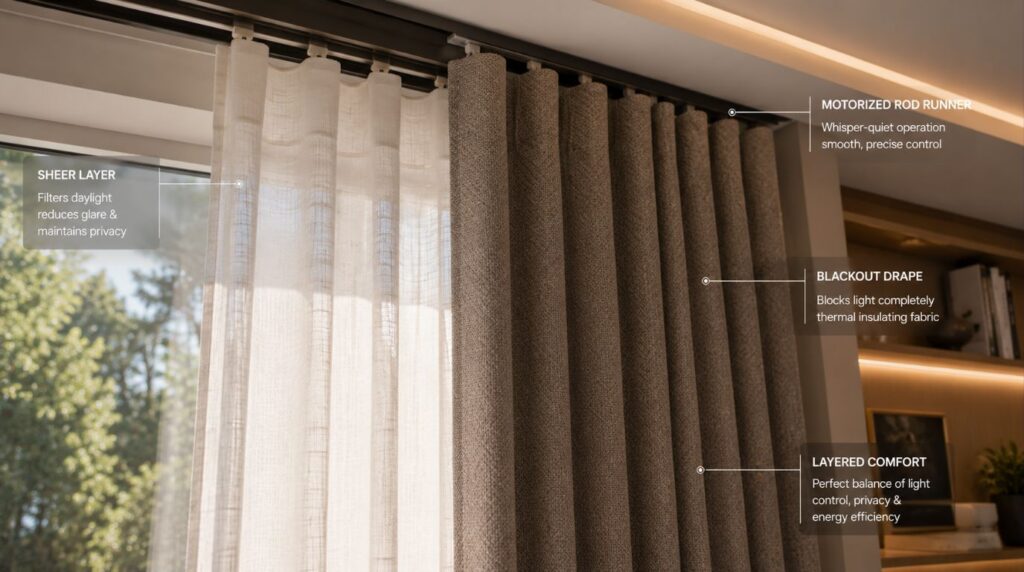
Fabric selection matters.
Blackout Curtains
Excellent insulation.
Thermal Curtains
Improve energy efficiency.
Layered Fabrics
Offer flexibility.
Sheer + Blackout Combinations
Provide daylight and insulation options.
The motor is only one part of the solution.
Energy Efficiency Benefits
By reducing solar heat gain, motorized curtains can help:
- Reduce cooling demand.
- Improve HVAC efficiency.
- Lower energy waste.
The greatest benefits often occur in homes with:
- Large windows
- Glass facades
- Strong sunlight exposure
Why Large Windows Need Automation
Modern architecture increasingly uses:
- Floor-to-ceiling glass
- Open living spaces
- Panoramic windows
While beautiful, these designs create temperature challenges.
Motorized curtains help balance:
- Natural light
- Comfort
- Privacy
- Energy efficiency
Real-World Example
Imagine a west-facing living room. Without automation:
- Afternoon sunlight heats the room.
- Air conditioning works harder.
- Comfort decreases.
With motorized curtains:
- Curtains close automatically at 2 PM.
- Heat gain is reduced.
- Indoor temperatures remain more stable.
This is one of the simplest forms of passive climate control.
Why It Matters for Modern Homes
Homeowners increasingly want:
- Comfort
- Energy efficiency
- Sustainability
- Intelligent automation
Motorized curtains support all four.
They transform windows from a source of heat gain into part of the home’s climate strategy.
Our Perspective at Techtastic
At Techtastic, many homeowners initially choose motorized curtains for convenience.
Over time, they often appreciate:
- Better room temperatures
- Reduced glare
- Improved comfort
- More efficient cooling
When integrated with smart home systems, curtains become active participants in climate management rather than simply decorative elements.
Collaboration Opportunities for Developers, Architects & Interior Designers
Temperature control starts during design.
At Techtastic, we collaborate with:
- Architects
- Interior designers
- Residential developers
- Luxury builders
- Hospitality consultants
Solar Heat Management
Reduce indoor heat gain.
Window Automation Design
Improve comfort.
Climate Integration
Coordinate curtains with HVAC systems.
Energy-Efficient Homes
Support sustainability goals.
Luxury Residential Projects
Deliver intelligent comfort.
Future-Ready Developments
Integrate smart environmental controls. Early planning produces better results.
Key Takeaways
- Motorized curtains reduce solar heat gain.
- They improve indoor temperature stability.
- Automated schedules optimize comfort.
- They support air conditioning efficiency.
- Smart home integration enhances climate control.
- Thermal and blackout fabrics improve performance.
- Large windows benefit significantly from automation.
Frequently Asked Questions
1. Do automated curtains reduce room temperature?
A. Yes. They help reduce solar heat gain by blocking direct sunlight.
2. Can automated curtains lower air conditioning usage?
A. They can reduce the cooling load by limiting heat entering the room.
3. Is automated curtain energy efficient?
A. Yes. They improve climate management and support HVAC efficiency.
4. Which curtains work best for temperature control?
A. Blackout and thermal curtains typically provide the best insulation.
5. Can an automated curtain work with smart thermostats?
A. Yes. Many systems integrate with smart home and climate systems.
6. Do curtains help in winter?
A. Yes. They reduce heat loss through windows.
7. Is an automated curtain better than a manual curtain?
A. Automated operation allows more consistent temperature control.
8. Is an automated curtain worth it for large windows?
A. Absolutely. Large glass surfaces often benefit the most from automated shading.
Conclusion
Motorized curtains do much more than simply open and close automatically. By managing sunlight, reducing heat gain, and supporting climate control systems, they help create more comfortable and energy-efficient living spaces. Whether protecting rooms from harsh afternoon sun or helping retain warmth during cooler nights, automated curtains become an important part of modern home temperature management.
At Techtastic, we help homeowners, architects, and developers design motorized curtain solutions that combine comfort, energy efficiency, and smart home integration.
📞 Call/WhatsApp: 9769145145
📍 Our Operational Hubs: Navi Mumbai | Nashik | Lonavla | Sangli
With the right fabrics, automation schedules, and system design, motorized curtains can significantly improve both indoor comfort and overall home performance.
Looking for the best features to start with? Check out our practical guide on What Is the Best Smart Curtain System for Your Home in 2026? to plan a system that everyone can use effortlessly.