
Summary
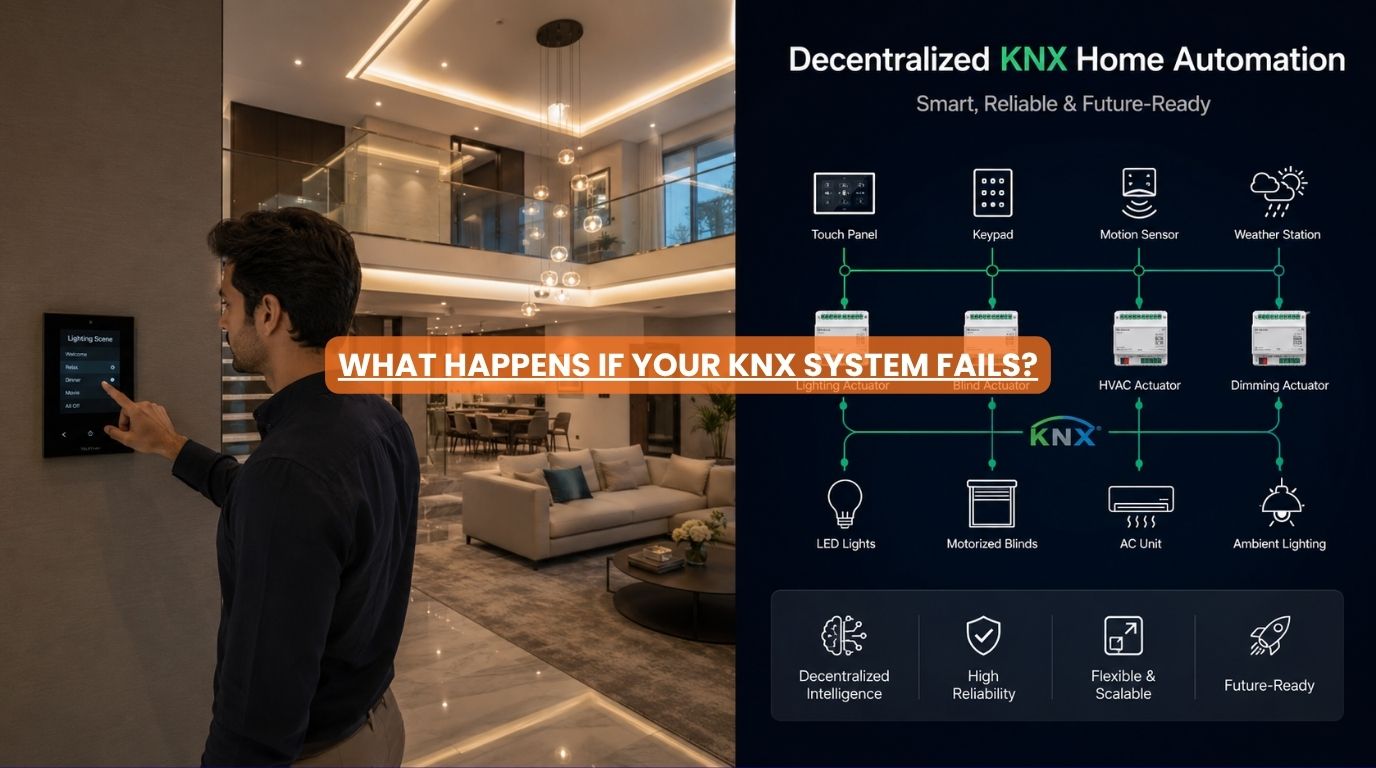
A KNX home automation system is designed for exceptional reliability and rarely experiences complete failures. Because KNX is a decentralized system, individual devices can fail without affecting the entire home. Most issues involve individual components, network infrastructure, or visualization systems rather than complete system outages. Proper programming, backups, and professional installation help ensure quick recovery and long-term reliability.
Introduction
One of the biggest concerns homeowners have before investing in automation is: “What happens if the system fails?”
It’s a valid question. People often imagine scenarios where:
- The lights stop working.
- Curtains won’t open.
- Air conditioning stops responding.
- The entire house becomes unusable.
This fear is understandable because many people have experienced unreliable consumer smart home products. However, the KNX home automation system works very differently.
At Techtastic, one of the reasons we recommend KNX for premium homes is that it was specifically designed for reliability. In fact, complete KNX system failures are extremely rare. And even if a component experiences a problem, the entire home typically continues functioning. Let’s understand why.
Quick Answer
If a KNX home automation system experiences a problem, the entire home usually does not stop functioning. KNX uses a decentralized architecture, meaning individual devices such as switches, sensors, or touch panels can fail independently without affecting the rest of the system. Lighting, climate control, and automation functions often continue operating normally, making KNX one of the most reliable smart home technologies available.
Does an Entire KNX System Ever Fail?
The simple answer is: Very rarely.
Unlike many consumer smart home platforms, KNX does not rely on a single central controller for every function. Instead, the system is decentralized. This means:
- Each device has intelligence.
- Devices communicate independently.
- Individual failures are isolated.
This architecture significantly improves reliability.
Why KNX Is Different From Many Smart Homes
Many Wi-Fi smart homes operate like this: One hub fails → the entire system stops.
KNX operates differently. Each device can continue performing its assigned tasks independently.
Examples:
- Lighting actuators control lighting.
- Curtain actuators control curtains.
- Thermostats control the climate.
This prevents a single failure from affecting the entire home.
The Most Common KNX Issues
Complete system failure is uncommon. More often, homeowners may experience:
Touch Panel Problems
Examples:
- Frozen interface
- Software issues
- Display problems
Usually, the rest of the home continues functioning.
Network Issues
Remote access apps may stop working because of:
- Router failures
- Internet outages
- Wi-Fi problems
However, local KNX functions often continue operating.
Individual Device Failure
Examples:
- Damaged sensor
- Faulty switch
- Failed actuator
Only that specific device is affected.
Example: If a Switch Fails
Imagine a bedroom keypad stops working. The homeowner may still control the room through:
- Another switch
- Mobile app
- Touch panel
- Automation scenes
The lighting circuit itself usually continues operating. This redundancy improves reliability.
What Happens If a Touch Panel Fails?
Many homeowners worry about losing their touch screen.
In most KNX homes:
- Keypads still work.
- Sensors still operate.
- Automated scenes continue.
- Lighting functions remain active.
The touch panel is often simply one method of control. The house itself remains operational without fully affecting the KNX home automation system.
What Happens During a Power Outage?
A power outage affects any electrical systems, but it does not cause a KNX home automation system to fail. During a power loss:
- Lighting turns off.
- Motors stop operating.
- Automation pauses.
However:
- Programming remains intact.
- System settings are preserved.
- Operations resume after power returns.
Many luxury homes also include backup power systems.
Can Internet Failure Affect KNX?
This is another common concern. The answer: Usually very little.
Most KNX systems operate locally. This means:
- Lighting works.
- Climate control works.
- Curtains work.
- Scenes continue.
Only features such as:
- Remote access
- Cloud services
- Mobile notifications
May become temporarily unavailable, and so it doesn’t end up being a whole KNX home automation system failure.
What If the KNX Server Fails?
Some modern systems include visualization servers.
Examples:
- Mobile app servers
- Visualization platforms
If these fail:
- Apps may stop working.
- The remote control may be unavailable.
However:
- Keypads continue functioning.
- Sensors still operate.
- Core automation remains active.
Again, the decentralized design protects the home.
Why Decentralization Makes KNX Reliable
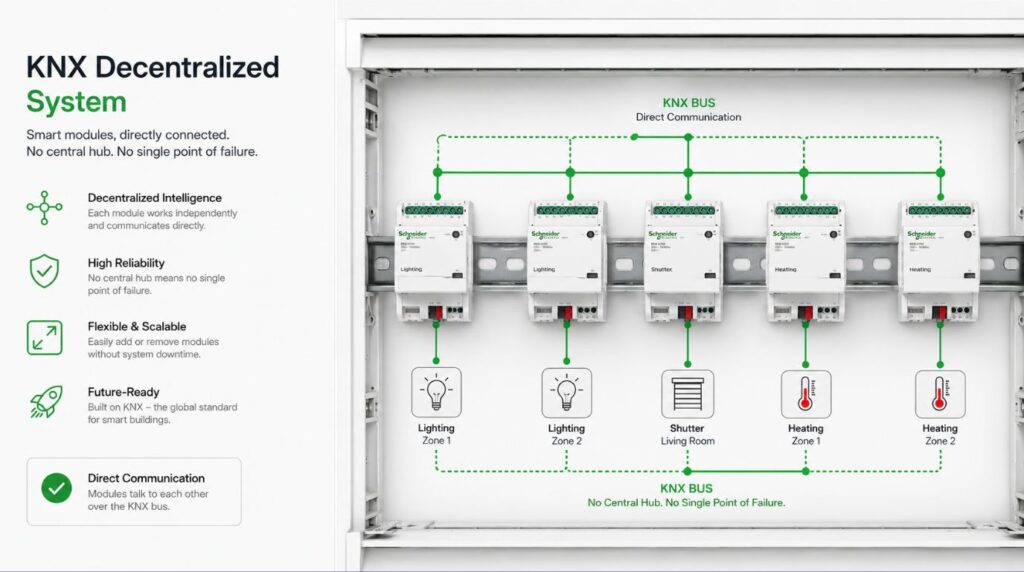
This is arguably KNX’s biggest advantage.
| Traditional Smart Hub | KNX Home Automation System |
| Central point of failure | Distributed intelligence |
| One failure affects all devices | Failures remain isolated |
| Cloud dependence | Local operation |
| System-wide outages possible | Limited impact failures |
| Higher risk | Greater reliability |
This is why KNX is widely used in:
- Luxury homes
- Hotels
- Commercial buildings
- Hospitals
- Airports
Reliability matters.
How Long Do KNX Devices Last?
Many KNX installations operate successfully for:
- 10 years
- 15 years
- 20 years or more
The system was designed for long-term building infrastructure.
Unlike many consumer smart devices, KNX products often remain supported for years.
How KNX Home Automation System Backups Help
Professional KNX projects include:
- Programming backups
- Configuration files
- Documentation
These backups allow:
- Fast recovery
- Easier upgrades
- Simple replacements
At Techtastic, we strongly recommend maintaining project backups.
Warning Signs Your KNX Home Automation System Needs Attention
Homeowners should watch for:
Delayed responses
May indicate network issues.
Unresponsive devices
Could suggest hardware problems.
App connectivity issues
Often related to the internet or servers.
Inconsistent automation
May require programming adjustments.
Early diagnosis simplifies resolution.
How to Reduce the Risk of Problems
Professional Installation
Proper design improves reliability.
Quality Components
Reliable devices reduce failures.
System Backups
Protect programming.
Periodic Reviews
Identify issues early.
Strong Networking
Supports modern integrations. These practices maximize long-term performance.
Real-World Example
Imagine a homeowner experiences:
- Internet outage
- Router failure
The homeowner may lose:
❌ Mobile app control
❌ Remote access
However, they still retain:
✅ Wall switches
✅ Lighting control
✅ Climate control
✅ Curtain automation
✅ Scheduled scenes
This demonstrates why the KNX home automation system is considered highly reliable.
Why It Matters for Modern Homes
Homeowners increasingly depend on automation for:
- Comfort
- Security
- Convenience
- Energy management
Reliability becomes essential. The best automation systems continue working quietly in the background. KNX was specifically designed to provide that level of dependability.
Our Perspective at Techtastic
At Techtastic, one of the most common misconceptions we hear is: “What if my entire smart home stops working?”
In reality, we find that most KNX issues involve:
- Networking
- User interfaces
- Expansions
- Updates
Complete KNX home automation system failures are extremely uncommon. This is one reason we continue recommending KNX for homeowners who want long-term reliability and peace of mind.
Collaboration Opportunities for Developers, Architects & Interior Designers
Reliability begins during planning. At Techtastic, we collaborate with:
- Architects
- Interior designers
- Residential developers
- Luxury home builders
- Hospitality consultants
Redundant System Design
Improve reliability.
Backup Planning
Protect system investments.
Infrastructure Design
Support long-term operation.
KNX Integration
Deliver stable automation.
Luxury Projects
Create dependable experiences.
Future-Ready Homes
Support decades of use. Early planning reduces risks significantly.
Key Takeaways
- Complete KNX system failures are extremely rare.
- KNX uses decentralized intelligence.
- Individual device failures usually remain isolated.
- Internet outages rarely affect core automation.
- Programming is preserved during power outages.
- System backups simplify recovery.
- KNX is one of the most reliable automation platforms available.
Frequently Asked Questions
1. Can an entire KNX home automation system fail?
A. Complete system failures are extremely rare because KNX is decentralized.
2. What happens if a KNX switch stops working?
A. Only that individual switch is affected. Other controls usually continue operating.
3. Does KNX depend on the internet?
A. No. Most KNX functions operate locally.
4. What happens during a power outage?
A. Automation pauses temporarily and resumes after power returns.
5. Can KNX lose its programming?
A. Not typically. Most configurations remain stored.
6. How reliable is a KNX Home Automation System?
A. KNX is considered one of the most reliable home automation systems available.
7. Can a failed device be replaced?
A. Yes. Individual components can usually be replaced without affecting the entire system.
8. How can I prevent KNX problems?
A. Professional installation, backups, quality devices, and periodic reviews help maintain reliability.
Conclusion
The fear of a complete smart home failure is understandable, but the KNX home automation system was specifically designed to prevent these situations. Its decentralized architecture ensures that individual device issues rarely affect the rest of the home, allowing lighting, climate control, curtains, and automation routines to continue functioning even if one component fails.
At Techtastic, we help homeowners, architects, and developers create a KNX home automation system that prioritizes reliability, scalability, and long-term performance.
📞 Call/WhatsApp: 9769145145
📍 Our Operational Hubs: Navi Mumbai | Nashik | Lonavla | Sangli
With proper design, professional installation, and thoughtful maintenance, a KNX smart home can continue delivering comfort, convenience, and peace of mind for many years to come.
Want to ensure your system investment is fully protected? Head over to our deep dive on KNX Smart Home Maintenance: Full Guide For Homeowners (2026) to learn how we can future-proof your smart home infrastructure.