
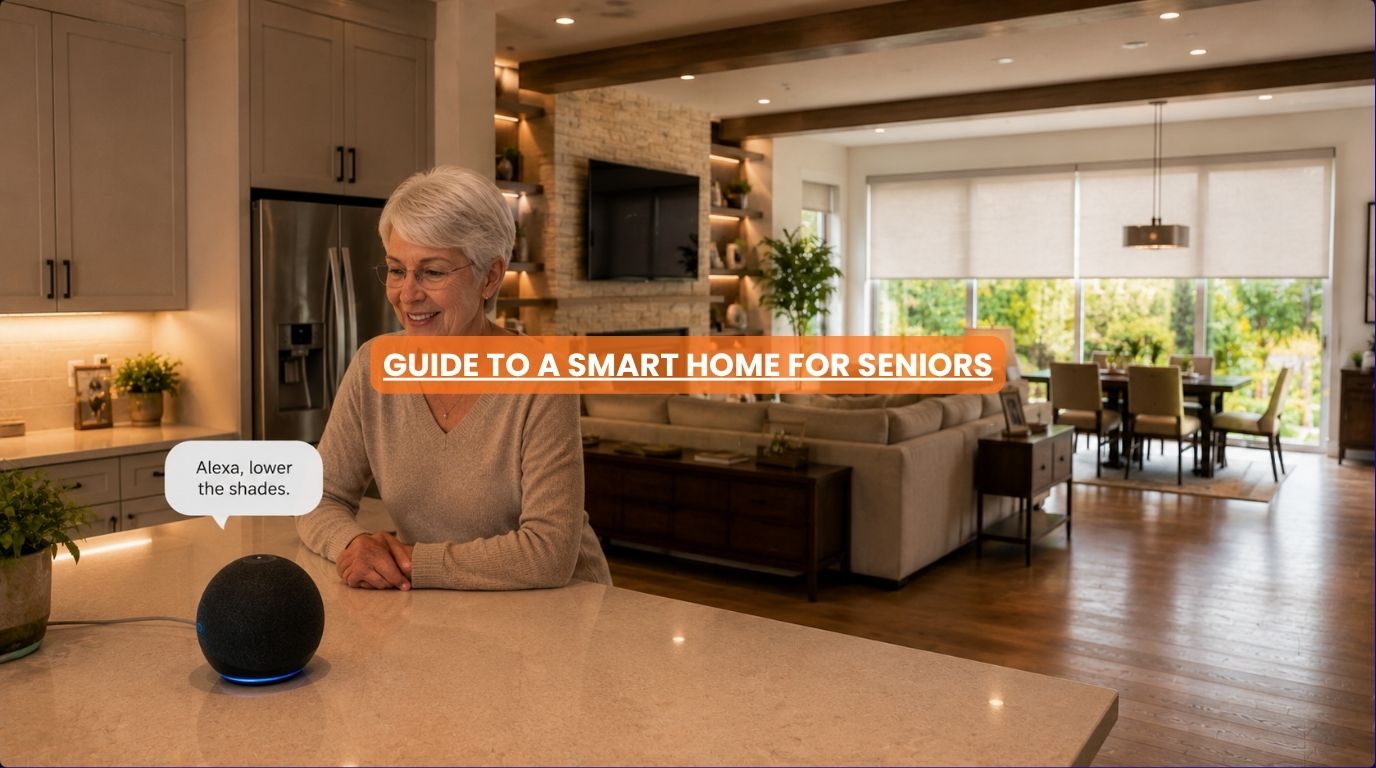
Many families eventually face an important question: How can we help our parents remain safe, comfortable, and independent as they grow older?
For many seniors, staying in their own home is strongly preferred over relocating to assisted living or care facilities. The challenge is ensuring that the home continues to support changing mobility, safety, and lifestyle needs. This is where smart home technology can make a meaningful difference.
At Techtastic, we’re seeing growing interest in a smart home for seniors. While many people associate home automation with convenience and luxury, some of its most valuable applications involve safety, accessibility, and independent living.
A thoughtfully designed smart home for seniors can help reduce risks, simplify daily routines, improve security, and provide reassurance to both them and their families.
Summary
A smart home for seniors can improve safety, independence, comfort, and peace of mind through features such as automated lighting, fall prevention measures, smart security systems, emergency alerts, voice control, climate automation, medication reminders, and remote monitoring. Home automation allows aging parents to maintain greater independence while helping family members stay connected and informed. The most effective systems focus on simplicity, reliability, and ease of use rather than complex technology.
Quick Answer
Smart home technology can help aging parents live more safely and independently by automating everyday tasks and reducing common household risks. Features such as automated lighting, smart locks, video door phones, voice assistants, climate control, emergency alerts, and remote monitoring improve convenience while supporting aging in place. When designed properly, a smart home for seniors can enhance both quality of life and family peace of mind.
Why A Smart Home for Seniors Is Becoming Important
As people age, certain everyday activities can become more challenging.
Examples include:
- Reaching light switches
- Managing security systems
- Adjusting curtains
- Monitoring visitors
- Controlling temperature
- Responding to emergencies
A smart home for seniors helps reduce these challenges through intelligent assistance and automation.
The goal isn’t to replace human care. The goal is to support independence while improving safety and comfort.
What Is Aging-in-Place Technology?
Aging-in-place technology refers to home features that allow older adults to continue living safely and independently in their own homes.
Examples include:
- Smart lighting
- Voice control
- Emergency alerts
- Automated security
- Health monitoring systems
- Home automation
These technologies help create environments that adapt to the needs of seniors rather than forcing seniors to adapt to the home.
Best Features for a Smart Home for Seniors
1. Automated Lighting for Safety
Lighting is one of the most important safety upgrades for seniors.
Poor visibility increases the risk of:
- Trips
- Falls
- Accidents
Smart lighting can:
- Turn on automatically when someone enters a room
- Illuminate hallways at night
- Adjust brightness based on the time of day
- Activate pathways during emergencies
Nighttime navigation becomes significantly safer.
2. Voice Control for Everyday Convenience
Voice assistants allow seniors to control devices without needing to reach switches or smartphones.
Examples include:
- Turn on the lights
- Close curtains
- Adjust temperature
- Play music
- Call family members
Voice control can be especially valuable for individuals with mobility limitations.
3. Smart Door Locks and Access Control
Managing keys can become difficult for some seniors.
Smart locks provide:
- Keyless access
- Remote management
- Temporary access permissions
- Visitor tracking
Family members can also assist remotely when necessary.
4. Video Door Phones and Visitor Verification
One common concern for seniors is answering the door.
Video door phones allow them to:
- See visitors before opening the door
- Communicate safely
- Verify deliveries
- Reduce security risks
This adds an important layer of protection.
5. Smart Security Systems
Security contributes directly to peace of mind.
Smart security systems may include:
- Cameras
- Motion sensors
- Intrusion detection
- Emergency notifications
These systems help seniors feel more secure while providing reassurance to family members.
6. Climate Control Automation
Temperature management becomes increasingly important with age.
Smart climate systems can:
- Maintain comfortable temperatures
- Automate schedules
- Reduce energy waste
- Prevent overheating or excessive cooling
Comfort improves while reducing manual adjustments.
7. Motorized Curtains
Opening and closing curtains can become inconvenient in larger homes.
Motorized curtains allow seniors to:
- Control privacy easily
- Manage sunlight
- Reduce physical effort
Automation can handle these tasks automatically.
8. Emergency Alerts and Notifications
One of the most valuable features of a smart home for seniors is emergency awareness.
Systems can provide:
- Security alerts
- Smoke detector notifications
- Water leak alerts
- Unusual activity notifications
These alerts can be sent to both seniors and family members.
How a Smart Home for Seniors Helps Prevent Falls
Falls remain one of the most significant risks for older adults. Automation can reduce risk through:
Motion-Activated Lighting
Lights activate automatically.
Pathway Illumination
Night routes remain visible.
Automated Routines
Reduce unnecessary movement around the home.
Voice Control
Minimize the need to reach switches.
Small improvements can have a meaningful impact on safety.
Remote Monitoring Without Sacrificing Independence
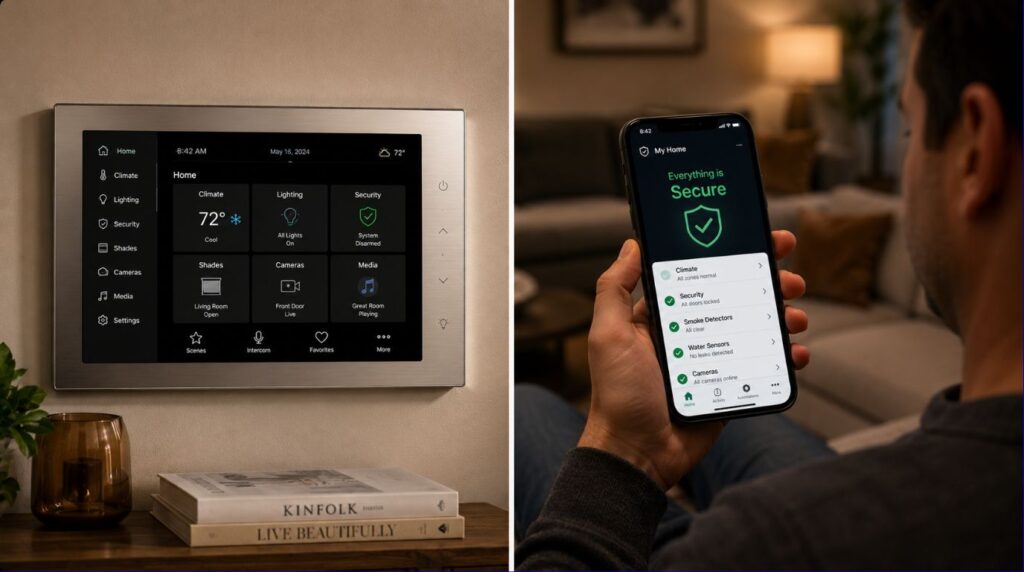
Many families want reassurance without creating a sense of surveillance.
Modern smart homes allow family members to:
- Check security status
- Receive alerts
- Verify home activity
- Monitor environmental conditions
While allowing seniors to maintain privacy and independence.
This balance is important.
Smart Home Features That Families Value Most
| Feature | Benefit |
|---|---|
| Smart lighting | Fall prevention |
| Voice assistants | Accessibility |
| Smart locks | Security & convenience |
| Video door phones | Visitor safety |
| Climate control | Comfort |
| Security systems | Peace of mind |
| Emergency alerts | Faster response |
| Motorized curtains | Daily convenience |
These features often provide the greatest day-to-day value.
Common Mistakes Families Make
Focusing on Technology Instead of Usability
The simplest solution is often the best solution.
Overcomplicating Controls
Technology should be intuitive and easy to operate.
Ignoring Future Needs
A system should support changing requirements over time.
Choosing Devices Without Integration
A unified system is easier to manage than multiple disconnected apps.
Why a Smart Home for Seniors Supports Independent Living
Many seniors want to remain in familiar surroundings.
A smart home for seniors supports this goal by helping with:
- Daily tasks
- Security
- Comfort
- Communication
- Emergency awareness
The result is often greater confidence and independence.
Why It Matters for Modern Families
Families today often live in different cities or maintain busy schedules.
Smart home technology helps bridge this gap by providing:
- Greater visibility
- Better communication
- Enhanced safety
- Increased independence
It offers reassurance without reducing personal freedom.
Our Perspective at Techtastic
At Techtastic, we believe the best smart home for seniors is one that genuinely improves people’s lives.
For aging parents, that means focusing on:
- Safety
- Simplicity
- Reliability
- Accessibility
- Future scalability
We typically recommend starting with:
- Smart lighting
- Security systems
- Voice control
- Access management
- Climate automation
These features often provide the greatest impact while remaining easy to use.
Technology should feel supportive—not overwhelming.
Collaboration Opportunities for Developers, Architects & Interior Designers
Age-friendly homes perform best when accessibility and automation are planned together.
At Techtastic, we collaborate with:
- Architects
- Interior designers
- Residential developers
- Senior living consultants
- Luxury home builders
- Healthcare-focused project planners
Aging-in-Place Design
Create homes that support long-term independence.
Safety-Focused Automation
Reduce household risks while improving usability.
Accessible Lighting Design
Improve visibility and navigation.
Integrated Security Planning
Enhance protection and peace of mind.
Future-Ready Residential Projects
Prepare homes for evolving lifestyle needs.
Wellness-Oriented Smart Living
Combine comfort, safety, and intelligent technology.
Early planning helps create homes that remain functional and comfortable for years to come.
Key Takeaways
- A smart home for seniors can significantly improve safety for aging parents.
- Automated lighting helps reduce fall risks.
- Voice control improves accessibility.
- Smart security systems enhance protection and peace of mind.
- Climate automation improves comfort.
- Emergency alerts provide reassurance to families.
- The best systems prioritize simplicity and reliability.
- A smart home for seniors supports independent living and aging in place.
Frequently Asked Questions
1. What is the best smart home technology for seniors?
A: Automated lighting, voice assistants, smart locks, video door phones, climate control, and security systems are among the most valuable features of a smart home for seniors.
2. Can smart homes help aging parents live independently?
A: Yes. Smart home technology can automate daily tasks, improve safety, and support independent living.
3. Are smart homes difficult for seniors to use?
A: Not when designed properly. The best systems focus on simplicity, intuitive controls, and automation.
4. How can smart homes improve safety for elderly parents?
A: Features such as automatic lighting, emergency alerts, smart security, and voice control help reduce risks and improve safety.
5. Can family members monitor smart homes remotely?
A: Yes. Many systems allow family members to receive alerts and check system status remotely.
6. Do voice assistants help seniors?
A: Absolutely. Voice control reduces the need to operate switches, apps, and physical controls.
7. Can smart homes help prevent falls?
A: Automated lighting and safer navigation pathways can reduce common fall risks.
8. Is home automation worth it for aging parents?
A: For many families, the combination of safety, independence, convenience, and peace of mind makes home automation a valuable investment.
Conclusion
A smart home for seniors is about much more than convenience. When thoughtfully designed, home automation can help aging parents remain safe, comfortable, independent, and connected while providing reassurance to family members. From automated lighting and voice control to security systems and emergency alerts, technology can play an important role in supporting aging in place.
At Techtastic, we help homeowners, families, architects, and developers create smart living environments that prioritize safety, accessibility, and long-term comfort.
📞 Call/WhatsApp: 9769145145
📍 Our Operational Hubs: Navi Mumbai | Nashik | Lonavla | Sangli
By combining intelligent automation with thoughtful design, we help create homes that support both independence and peace of mind for years to come.
Looking for the best features to start with? Check out our practical guide on 8 Essential Home Automation Features That Matter To Families to plan a smart home that everyone can use effortlessly.