
Buying a smart home system is exciting. From automated lighting and climate control to advanced security and entertainment systems, today’s smart home technologies promise greater convenience, comfort, efficiency, and control.
However, one of the biggest mistakes homeowners make is focusing on products before understanding the underlying smart home system requirements that make it successful.
At Techtastic, we often meet homeowners who begin their smart home journey by comparing devices, apps, and features. While those elements are important, the foundation of a reliable smart home starts much earlier—with proper planning, infrastructure, networking, scalability, and integration strategy.
Whether you’re building a new home, renovating an existing property, or upgrading specific spaces, understanding your smart home system requirements before you buy can save significant time, money, and frustration later.
Summary
Before purchasing a smart home system, homeowners should evaluate the critical smart home system requirements, including networking infrastructure, automation platform selection, electrical planning, device compatibility, security integration, scalability, and future expansion needs. A well-designed smart home depends on more than individual devices—it requires a reliable foundation that supports long-term performance, integration, and flexibility. Proper planning helps avoid compatibility issues, expensive retrofits, and limited upgrade options in the future.
Quick Answer
Before buying a smart home system, homeowners should assess their networking infrastructure, automation goals, security requirements, electrical planning, integration needs, and future expansion plans. The most successful smart homes are built on a scalable foundation that supports lighting, climate control, security, entertainment, and automation under a unified ecosystem. Understanding these smart home system requirements early helps ensure better performance, easier upgrades, and long-term value.
What Is a Smart Home System?
A smart home system connects various technologies throughout a property so they can communicate, automate tasks, and be controlled centrally.
Common systems include:
- Smart lighting
- Security systems
- CCTV surveillance
- Smart locks
- Climate control
- Motorized curtains
- Home theatres
- Audio systems
- Energy management solutions
The goal is to create a home that responds intelligently to user preferences and daily routines.
Why Planning Matters Before Buying
Many homeowners assume smart homes are simply collections of connected devices.
In reality, successful smart homes rely on:
- Proper infrastructure
- Reliable networking
- Automation strategy
- Device compatibility
- Long-term scalability
Without planning, homeowners often encounter:
- Multiple incompatible apps
- Connectivity problems
- Upgrade limitations
- Poor user experiences
The right foundation prevents these issues.
Smart Home System Requirements #1: Reliable Networking Infrastructure
A smart home is only as reliable as the network supporting it.
Networking forms the backbone of:
- Security cameras
- Smart devices
- Mobile control
- Streaming services
- Automation systems
Key considerations include:
Structured Cabling
Provides reliable connectivity for critical systems.
Enterprise-Grade Wi-Fi
Ensures consistent coverage throughout the property.
Network Segmentation
Improves security and performance.
Future Capacity
Supports future device expansion.
At Techtastic, we often say that a smart home’s performance starts with its network.
Smart Home System Requirements #2: Clear Automation Goals
Before selecting technology, homeowners should identify what they want the system to accomplish.
Common objectives include:
- Improved security
- Energy efficiency
- Convenience
- Comfort
- Entertainment
- Remote monitoring
Understanding priorities helps guide system design and investment decisions.
Smart Home System Requirements #3: Scalability
One of the most important smart home system requirements is future flexibility.
Many homeowners begin with:
- Smart lighting
- Security systems
- Mobile control
Later, they may add:
- Motorized curtains
- Climate automation
- Home theatres
- Energy management
- Access control
A scalable platform allows expansion without replacing existing infrastructure.
Smart Home System Requirements #4: Electrical & Wiring Planning
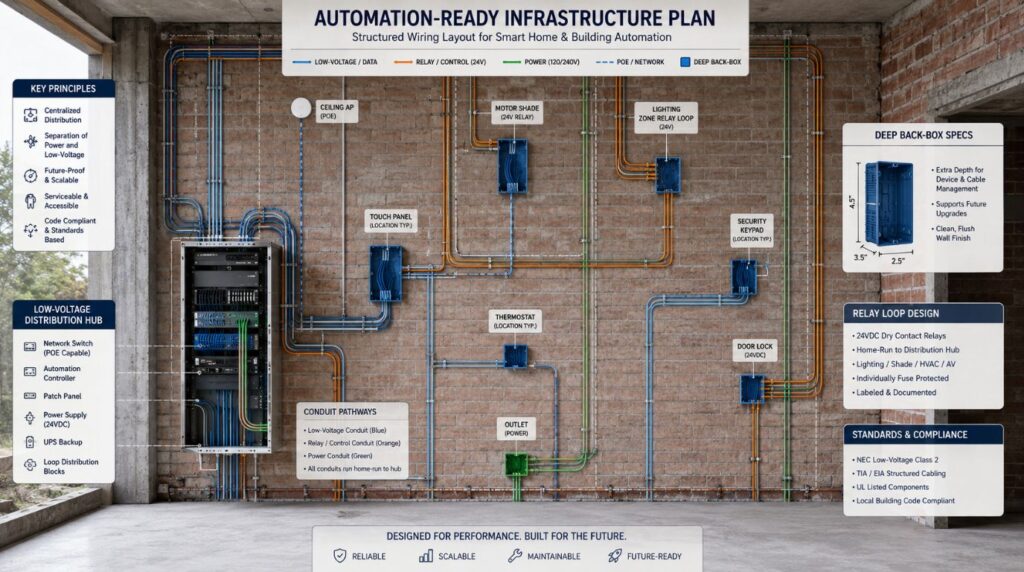
Smart home performance depends heavily on proper electrical planning.
Important considerations include:
- Automation-ready wiring
- Power requirements
- Device locations
- Equipment spaces
- Future provisions
For new construction projects, planning during the design phase delivers the best results.
Smart Home System Requirements #5: Security Integration
Security should never be treated as an afterthought.
Modern smart homes often integrate:
- CCTV cameras
- Smart locks
- Access control
- Video door phones
- Motion sensors
- Alarm systems
When connected through automation, these systems provide greater visibility and protection.
Smart Home System Requirements #6: Choosing the Right Automation Platform
Not all smart home platforms offer the same flexibility.
| Open Automation Platforms | Closed Ecosystems |
|---|---|
| Greater flexibility | Limited expansion |
| Multi-brand compatibility | Brand restrictions |
| Better scalability | Ecosystem lock-in |
| Long-term adaptability | Reduced flexibility |
Choosing the right platform is one of the most important long-term decisions homeowners make.
Smart Home System Requirements #7: User Experience
Technology should simplify life.
Questions to consider include:
- Is control intuitive?
- Can multiple family members use it easily?
- Does the interface feel natural?
- Is centralized control available?
The best smart homes feel effortless to operate.
Smart Home System Requirements #8: Future Technology Compatibility
Technology evolves rapidly.
Future-ready homes should be prepared for:
- New automation devices
- Energy management solutions
- EV charging integration
- Solar power systems
- Emerging smart home technologies
Planning for future compatibility protects your investment.
Common Smart Home Buying Mistakes
Focusing Only on Devices
Products matter, but infrastructure matters more.
Ignoring Networking Requirements
Poor connectivity is one of the most common causes of smart home frustrations.
Choosing Systems Based Solely on Price
The cheapest solution may not provide long-term value.
Failing to Plan for Expansion
Homeowners often outgrow systems that weren’t designed for scalability.
Treating Security Separately
Integrated security delivers better protection and user experiences.
What Should You Automate First?
For most homeowners, we recommend starting with:
Smart Lighting
Provides immediate convenience and automation benefits.
Security Systems
Enhances safety and peace of mind.
Access Control
Improves security and simplifies entry management.
Climate Control
Increases comfort and energy efficiency.
These systems deliver strong everyday value.
Why It Matters for Modern Homes
Today’s homes are expected to support:
- Remote work
- Digital lifestyles
- Enhanced security
- Energy efficiency
- Connected experiences
Smart home technology plays an increasingly important role in meeting these expectations.
The difference between a successful smart home and a frustrating one often comes down to planning.
Our Perspective at Techtastic
At Techtastic, we’ve found that homeowners who invest in planning almost always achieve better outcomes than those who focus solely on products.
We typically recommend prioritizing:
- Structured networking
- Scalable automation platforms
- Security integration
- Future-ready infrastructure
- User-friendly experiences
Technology should evolve with your lifestyle, not limit it.
The smartest investment isn’t necessarily the most advanced device—it’s building the right foundation.
Collaboration Opportunities for Developers, Architects & Interior Designers
Smart homes are most successful when technology planning begins early.
At Techtastic, we collaborate with:
- Architects
- Interior designers
- Luxury home builders
- Real estate developers
- Hospitality consultants
Smart Infrastructure Planning
Design homes prepared for future automation expansion.
Structured Networking Design
Build reliable foundations for connected living.
Security & Automation Integration
Create seamless, intelligent environments.
Lighting & Control Planning
Enhance functionality while preserving aesthetics.
Future-Ready Residential Design
Support long-term technology evolution.
Luxury Development Projects
Deliver differentiated living experiences through intelligent integration.
Early collaboration creates smarter, more adaptable properties.
Key Takeaways on Smart Home System Requirements
- Smart home success starts with planning, not products.
- Networking infrastructure is one of the most important smart home system requirements.
- Scalability protects long-term investments.
- Security should be integrated into the overall automation strategy.
- Open platforms offer greater flexibility and future compatibility.
- Early planning reduces costs and improves results.
Frequently Asked Questions
1. What do I need before installing a smart home system?
A: You need reliable networking, automation goals, electrical planning, and a scalable technology strategy.
2. Can I add smart home features later?
A: Yes. A scalable system allows homeowners to expand functionality over time.
3. What is the most important part of a smart home?
A: Reliable infrastructure and networking are often the foundation of successful automation.
4. Do smart homes require special wiring?
A: Some systems benefit from structured cabling and automation-ready electrical planning, especially in new construction.
5. How do I choose the right smart home platform?
A: Focus on scalability, compatibility, integration capabilities, and long-term flexibility.
6. Is networking important for smart homes?
A: Absolutely. Networking impacts performance, reliability, and user experience across all connected systems.
7. Should security be included in smart home planning?
A: Yes. Security integration is one of the most valuable components of modern smart home design.
8. Can smart home systems increase property value?
A: Future-ready smart homes can improve property appeal and differentiate homes in competitive markets.
Conclusion
Before investing in a smart home system, it’s important to understand that the most successful projects begin with planning rather than products. Reliable networking, scalable infrastructure, thoughtful automation strategy, and future-ready design all contribute to long-term success.
At Techtastic, we help homeowners, architects, and developers create smart home ecosystems that deliver meaningful benefits today while remaining adaptable for tomorrow.
📞 Call/WhatsApp: 9769145145
📍 Our Operational Hubs: Navi Mumbai | Nashik | Lonavla | Sangli
By understanding the requirements before you buy, you can make more informed decisions and build a smarter, more connected home with confidence.
Ready to take the next step? Explore our comprehensive breakdown on Is Home Automation Worth It? Top Benefits Explained to see how these requirements translate into real-world value for your property.