
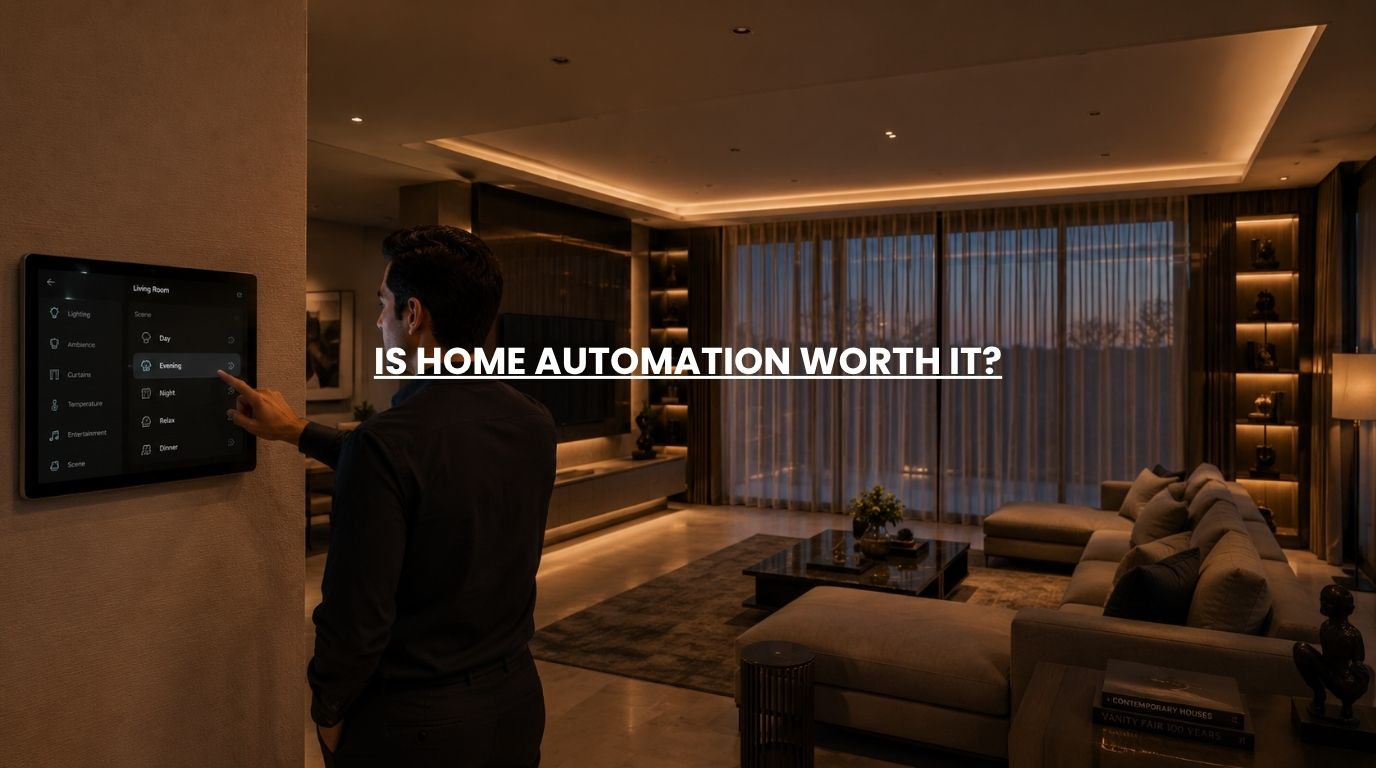
Home automation has moved far beyond being a luxury reserved for tech enthusiasts. Today, smart homes are becoming increasingly common in modern residences, luxury apartments, villas, and even mid-sized family homes.
Yet one question keeps coming up in almost every consultation we have at Techtastic: “Is home automation worth it for my property investment?”
It’s a fair question. After all, homeowners want to know whether smart home technology delivers meaningful value or adds another layer of complexity.
The answer to is home automation worth it depends on how automation is designed and implemented. When planned correctly, home automation can significantly improve convenience, security, energy efficiency, comfort, and even property value. More importantly, it can simplify daily living in ways that many homeowners don’t fully appreciate until they experience it firsthand.
If you are currently evaluating a new construction or extensive renovation project, this comprehensive guide will help you understand exactly why is home automation worth it and which foundational benefits deliver the absolute highest return on investment.
Summary
If you’re wondering is home automation worth it, the answer for most homeowners is yes. Home automation improves convenience, security, energy efficiency, comfort, and property value while reducing everyday manual tasks. Smart home systems can automate lighting, climate control, security, entertainment, curtains, and appliances through centralized control and intelligent scheduling. Modern automation platforms also offer scalability, allowing homeowners to start small and expand over time. When professionally designed, home automation enhances both lifestyle and long-term home value.
Quick Answer – Is Home Automation Worth It?
Yes, home automation is worth it for homeowners who want greater convenience, enhanced security, improved energy efficiency, and a more connected living experience. Smart home systems can automate lighting, climate control, security, entertainment, and daily routines, reducing manual effort while improving comfort and control. When designed with scalability and future needs in mind, home automation can provide long-term value that extends well beyond simple convenience.
What Is Home Automation?
Home automation refers to the use of technology to control and automate various systems within a home.
These systems may include:
- Lighting
- Security systems
- Climate control
- Motorized curtains
- Home theatres
- Audio systems
- Appliances
- Energy management solutions
- Access control systems
Instead of operating independently, these systems communicate with one another and can be controlled through:
- Smart switches
- Mobile applications
- Touch panels
- Voice assistants
- Automated schedules
- Intelligent sensors
The goal is simple: make your home smarter, more responsive, and easier to live in.
Why Is Home Automation Growing So Rapidly?
Several factors are driving increased adoption of smart home technology:
- Greater smartphone usage
- Increased focus on convenience
- Rising energy costs
- Improved internet connectivity
- Enhanced security requirements
- Growing awareness of smart living benefits
Today’s homeowners expect homes to provide the same level of intelligence and connectivity they experience in other areas of life.
As a result, automation is quickly becoming an expected feature rather than a luxury upgrade.
The Top Benefits of Smart Infrastructure: Is Home Automation Worth It?
To determine is home automation worth it for your lifestyle, it is essential to analyze the tangible engineering and operational benefits that a unified framework brings to a luxury estate.
For most modern homeowners, is home automation worth it is no longer a question of technology but of lifestyle improvement. The benefits extend far beyond convenience and often create value every single day.
1. Unmatched Convenience
For many families, evaluating is home automation worth it, convenience is often the first benefit that justifies the investment.
Instead of managing multiple devices separately, home automation allows everything to work together.
Examples include:
- Turning off all lights with one command
- Locking doors remotely
- Adjusting room temperature automatically
- Opening curtains at sunrise
- Activating entertainment systems instantly
Small conveniences add up significantly over time.
2. Improved Home Security
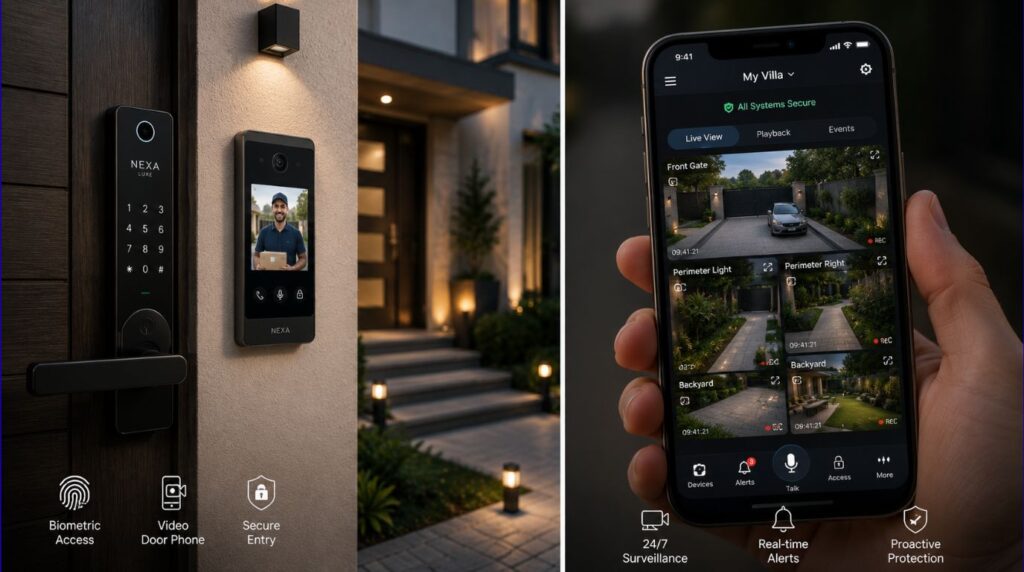
Security is one of the most valuable advantages of smart home technology. When asking is home automation worth it from an asset protection standpoint, the security advantages provide immediate clarity.
Integrated systems can include:
- CCTV cameras
- Smart locks
- Video door phones
- Motion sensors
- Intrusion alarms
- Access control systems
When connected through automation, these systems can respond intelligently to security events.
For example:
If unusual activity is detected:
- Cameras begin recording.
- Lights activate automatically.
- Notifications are sent instantly.
- Access points can lock automatically.
This creates a more proactive security environment.
3. Better Energy Efficiency
If you’re asking is home automation worth it from an energy-saving perspective, intelligent automation can reduce unnecessary power consumption throughout the home.
Smart systems can:
- Turn off unused lights
- Optimize HVAC operation
- Control motorized blinds and curtains
- Monitor energy consumption
- Reduce unnecessary appliance usage
Over time, these efficiencies can contribute to lower utility costs and a more sustainable home.
4. Enhanced Comfort
A truly smart home adapts to your lifestyle.
Automation can create personalized environments by adjusting:
- Lighting levels
- Room temperature
- Curtain positions
- Music preferences
- Entertainment settings
For example:
A “Relaxation Mode” scene might:
- Dim lights
- Close curtains
- Adjust temperature
- Start background music
All with a single command.
5. Centralized Control
One of the biggest frustrations homeowners face is managing multiple systems.
Home automation solves this by providing centralized control through:
- Mobile apps
- Touch panels
- Voice assistants
- Smart remotes
This creates a more intuitive and streamlined user experience.
6. Increased Property Value
Smart home technology is becoming increasingly attractive to buyers.
Features such as:
- Smart security
- Automated lighting
- Climate control
- Smart entertainment
- Energy management
Can make properties more appealing in competitive markets.
As demand for connected homes grows, automation can become a valuable differentiator.
7. Future-Ready Living
Technology continues to evolve rapidly.
Professionally designed smart homes can adapt more easily to:
- New devices
- Emerging technologies
- Energy management solutions
- Electric vehicle charging
- Renewable energy integration
This flexibility helps protect your investment over the long term.
Real-Life Home Automation Scenarios
Morning Routine Automation
Every morning:
- Curtains open automatically.
- Lights adjust gradually.
- Temperature settings optimize comfort.
- News or music begins playing.
The day starts effortlessly.
Leaving Home Scenario
When everyone leaves:
- The lights turn off.
- Security systems activate.
- Doors lock automatically.
- HVAC settings adjust for efficiency.
No need to check each system manually.
Movie Night Mode
With a single command:
- Curtains close.
- Lights dim.
- Home theatre activities.
- Audio settings adjust automatically.
The room transforms instantly.
Vacation Mode
While away:
- Security systems remain active.
- Lights simulate occupancy.
- Cameras provide remote monitoring.
- Curtains operate automatically.
The home remains protected even when empty.
Common Concerns About Home Automation
“Is Home Automation Worth It or Too Expensive?”
Not necessarily.
Many homeowners start with:
- Smart lighting
- Security automation
- Basic control systems
and expand gradually over time.
Scalable systems allow investments to be spread across multiple phases.
“Will It Be Difficult to Use?”
A properly designed smart home should simplify life, not complicate it.
The best automation systems focus on intuitive experiences and minimal user effort.
“What Happens If Technology Changes?”
Future-ready platforms are specifically designed to support expansion and technology evolution.
This is why choosing the right automation infrastructure is so important.
“Can Home Automation Improve Daily Life?”
In our experience, yes.
Many homeowners quickly become accustomed to the convenience, comfort, and efficiency automation provides.
Once experienced, it’s difficult to return to fully manual living.
Is Home Automation Worth It Compared to Traditional Living?
| Feature | Traditional Home | Automated Home |
| Lighting Control | Manual | Automated |
| Security Monitoring | Limited | Real-time |
| Energy Management | Basic | Intelligent |
| Climate Control | Manual | Automated |
| Access Control | Physical Keys | Smart Access |
| Remote Monitoring | No | Yes |
| Daily Convenience | Moderate | High |
The difference becomes increasingly noticeable as homeowners use these systems every day.
What Does Home Automation Cost?
One of the biggest factors homeowners consider when asking is home automation worth it is the initial investment. The cost of home automation varies depending on:
- Property size
- Number of systems automated
- Desired functionality
- Infrastructure requirements
- Integration complexity
Some homeowners begin with a few key features, while others implement comprehensive smart home ecosystems.
The important consideration is not simply cost—but long-term value and lifestyle improvement.
Why Home Automation Matters for Modern Homes?
Modern homes are expected to provide more than shelter.
Homeowners increasingly value:
- Convenience
- Safety
- Connectivity
- Sustainability
- Personalization
Home automation helps deliver all of these benefits while supporting evolving lifestyle expectations.
As technology becomes more integrated into daily life, automation is becoming a natural extension of modern residential design.
Our Perspective at Techtastic
At Techtastic, we’ve worked with homeowners across a wide range of projects—from simple automation upgrades to fully integrated luxury smart homes.
One thing we’ve consistently observed is that the greatest value comes from thoughtful design rather than excessive technology.
We typically recommend focusing first on:
- Lighting control
- Security integration
- Climate management
- Structured networking
- Future scalability
From there, homeowners can expand their systems based on evolving needs and preferences.
The most successful smart homes are the ones that make technology feel invisible while improving everyday experiences.
Collaboration Opportunities for Developers, Architects & Interior Designers
Smart homes perform best when technology planning begins during the design stage.
At Techtastic, we collaborate with:
- Architects
- Interior designers
- Luxury home builders
- Real estate developers
- Hospitality consultants
- Commercial project planners
Smart Infrastructure Planning
Create homes prepared for future automation expansion.
Lighting & Automation Integration
Design spaces where technology enhances aesthetics and functionality.
Security & Access Control Design
Build safer, more intelligent environments.
Home Theatre & Entertainment Planning
Create immersive connected living experiences.
Structured Networking Solutions
Ensure reliable connectivity throughout the property.
Luxury Residential Developments
Differentiate projects with intelligent technology integration.
By involving Techtastic early in the planning process, project teams can create future-ready spaces that deliver exceptional user experiences.
Key Takeaways on Is Home Automation Worth It?
- Home automation delivers benefits far beyond convenience.
- Smart homes improve security, comfort, and energy efficiency.
- Automation can increase property appeal and future readiness.
- Scalable systems allow homeowners to start small and expand later.
- The best smart homes focus on simplifying everyday life.
- Proper planning maximizes both performance and long-term value.
Frequently Asked Questions
1. Is home automation worth it for the average homeowner?
A: Yes. When evaluating is home automation worth it, most homeowners find that the combination of convenience, security, comfort, and energy efficiency provides long-term value that outweighs the initial investment.
2. Can I automate my home gradually?
A: Absolutely. Many homeowners start with lighting or security systems and expand over time.
3. Does home automation save energy?
A: Yes. Smart systems can optimize lighting, climate control, and appliance usage to improve efficiency.
4. Is home automation worth it only for luxury homes?
A: No. Automation solutions are available for a wide range of property types and budgets.
5. Can I control my home remotely?
A: Yes. Most modern automation systems allow remote monitoring and control through mobile devices.
6. Will smart home technology increase property value?
A: It can enhance market appeal and differentiate properties in increasingly technology-driven real estate markets.
7. What are the most popular home automation features?
A: Lighting control, security systems, climate automation, motorized curtains, and smart entertainment systems are among the most requested features.
8. What should I automate first?
A: Many homeowners begin with lighting control and security systems because they provide immediate value and everyday benefits.
Conclusion on Is Home Automation Worth It?
So, is home automation worth it?
For homeowners seeking greater convenience, enhanced security, improved comfort, and future-ready living, the answer is often yes. The key is choosing solutions that align with your lifestyle, budget, and long-term goals rather than simply adding technology for its own sake.
At Techtastic, we help homeowners, architects, and developers create intelligent environments that deliver meaningful benefits today while remaining adaptable for tomorrow.
📞 Call/WhatsApp: 9769145145
📍 Our Operational Hubs: Navi Mumbai | Nashik | Lonavla | Sangli
Whether you’re exploring your first smart home upgrade or planning a fully automated residence, the right automation strategy can transform the way you experience your home.