
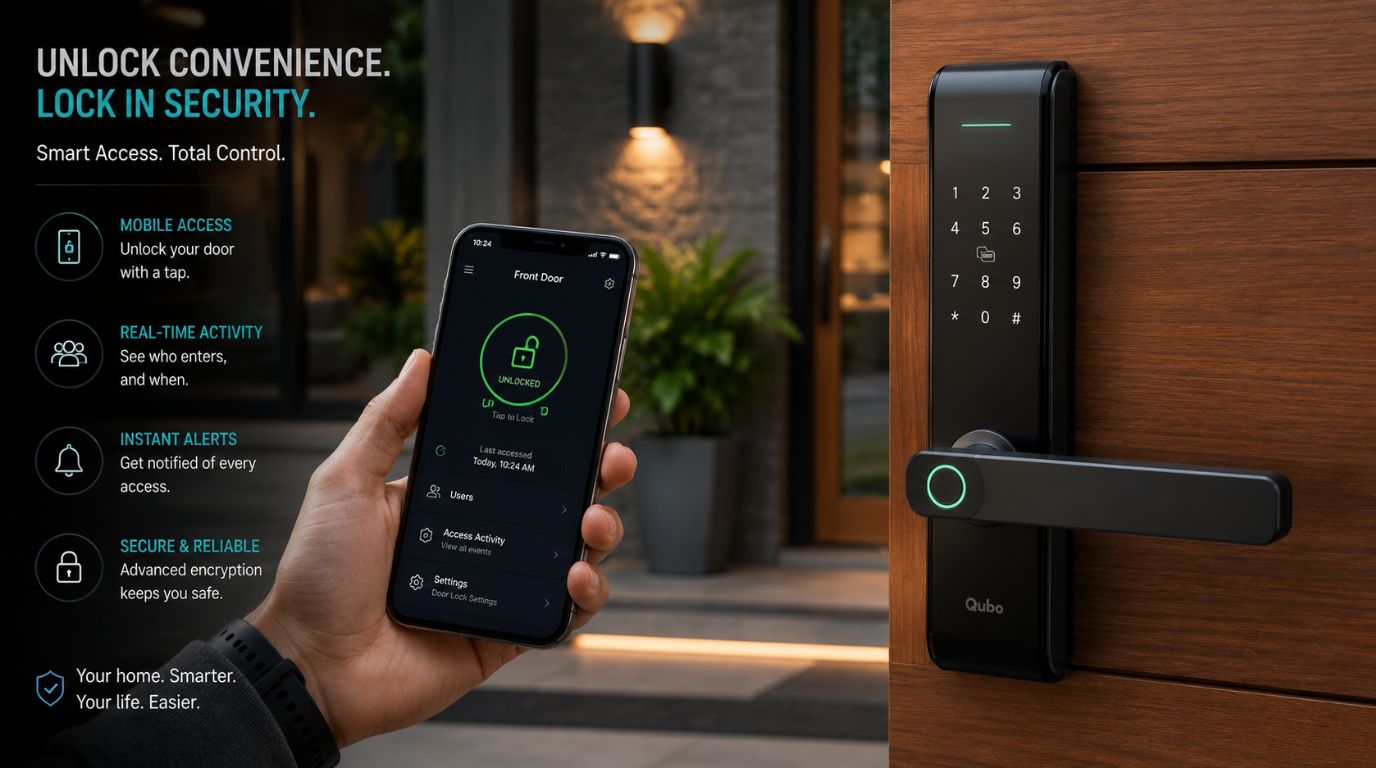
Smart home technology has transformed how we secure and access our homes. From unlocking doors remotely to granting temporary access to guests and monitoring entry activity in real time, automated door locks offer a level of convenience that traditional locks simply cannot match.
However, convenience often raises an important question: Is automating your smart door lock actually safe?
At Techtastic, this is one of the most common concerns we hear from homeowners, architects, and property developers. While smart locks can significantly improve security, not all systems are created equal. The safest approach is not simply installing a smart door lock—it’s implementing a secure access control strategy that combines reliable hardware, encrypted communication, intelligent automation, and proper system design.
When done correctly, a smart door lock can provide security that often exceeds traditional locking methods.
Summary
The safest way to automate door locks is through professionally installed smart access control systems that combine encrypted communication, secure authentication methods, remote monitoring, access logs, and integration with broader home automation and security systems. Homeowners should prioritize high-quality smart locks, multi-factor authentication, role-based access control, and automation platforms that support advanced security protocols. Proper planning and integration are far more important than simply choosing a lock with smart features.
Quick Answer
The safest way to automate door locks is to use a professionally designed smart access control system that combines secure smart locks, encrypted communication, user authentication, activity logging, and integration with home security systems. Features such as biometric access, temporary digital keys, remote monitoring, automatic locking schedules, and integration with surveillance cameras significantly improve security while maintaining convenience. Open and scalable automation platforms also provide greater long-term flexibility and protection.
Why More Homeowners Are Automating Door Locks
Traditional keys present several challenges:
- Keys can be lost.
- Keys can be copied.
- Access is difficult to manage.
- There is no activity tracking.
- Remote control is impossible.
Automated door lock systems solve many of these issues by giving homeowners greater visibility and control.
Benefits include:
- Keyless entry
- Remote access management
- Real-time notifications
- Visitor management
- Temporary access permissions
- Enhanced security monitoring
As smart homes become more common, automated access control is rapidly becoming a standard feature in premium residential projects.
What Is a Smart Door Lock System?
A smart door lock system replaces or enhances traditional locking mechanisms with digital access technologies.
Depending on the solution, access may be granted through:
- Mobile apps
- PIN codes
- Fingerprint recognition
- RFID cards
- Bluetooth credentials
- Remote authorization
- Smart home automation systems
Unlike traditional locks, smart access systems can record activity, automate security actions, and integrate with other technologies throughout the property.
The Safest Smart Door Lock Authentication Methods
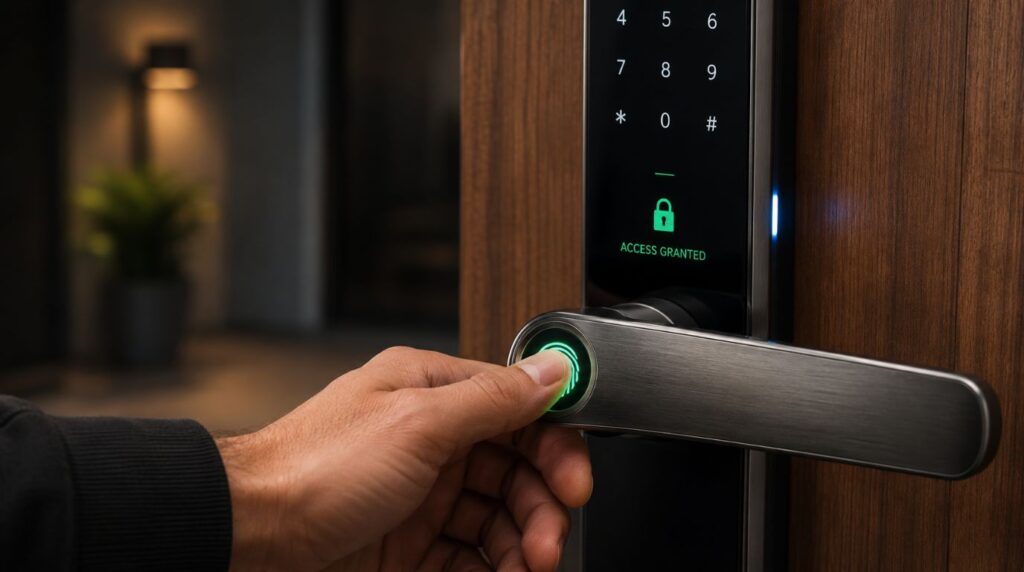
Not all access methods provide the same level of security.
Biometric Authentication
Fingerprint-based access is widely considered one of the safest options.
Advantages:
- Cannot be forgotten
- Difficult to duplicate
- Fast and convenient
- Eliminates physical keys
Biometric systems are increasingly popular in luxury residences.
PIN-Based Access
PIN codes remain a reliable solution when managed properly.
Best practices include:
- Using unique codes
- Updating codes periodically
- Avoiding predictable combinations
- Assigning separate codes to different users
PIN systems are particularly useful for domestic staff and service providers.
Mobile Credential Access
Many homeowners prefer using smartphones as digital keys.
Benefits include:
- Remote management
- Instant credential updates
- Temporary access permissions
- Activity monitoring
However, security depends heavily on proper authentication settings.
RFID Cards and Key Fobs
RFID access remains common in residential and commercial environments.
Advantages include:
- Quick access
- Easy credential management
- Suitable for multi-user environments
These systems work particularly well when integrated into broader access control platforms.
Why Does Multi-Factor Authentication Improve Security?
One of the safest approaches to automated access control is using multiple verification methods.
Examples include:
- Fingerprint + mobile verification
- PIN code + mobile authentication
- RFID card + biometric access
Multi-factor authentication significantly reduces the risk of unauthorized access.
For high-security properties, this approach provides an additional layer of protection.
Smart Door Lock Integration with Home Security Systems
The safest automated door lock systems do not operate independently.
Instead, they work alongside:
- CCTV cameras
- Video door phones
- Motion sensors
- Intrusion alarms
- Smart lighting
- Access control platforms
This creates a more comprehensive security ecosystem.
For example:
If an unauthorized access attempt occurs:
- Cameras begin recording.
- Notifications are sent instantly.
- Exterior lighting activates.
- Security personnel can be alerted.
The entire response can occur automatically.
Real-World Smart Door Lock Automation Scenarios
Family Access Management
Different users can receive personalized access permissions.
Examples:
- Homeowners receive full access.
- Children receive scheduled access.
- Domestic staff receive time-limited access.
- Guests receive temporary credentials.
This provides greater control than traditional keys.
Vacation Security Mode
While away:
- Doors automatically lock.
- Access attempts are logged.
- Remote monitoring remains active.
- Security alerts are sent in real time.
Homeowners can maintain control regardless of location.
Automatic Locking Schedules
Many homeowners worry about forgetting to lock doors.
Smart systems can:
- Lock automatically at night
- Activate based on occupancy status
- Lock after a specific period
- Trigger security routines
This reduces human error significantly.
Common Security Risks to Avoid
Choosing a Low-Quality Smart Door Lock
Not all products offer the same level of security.
Homeowners should prioritize:
- Established manufacturers
- Strong encryption
- Certified security standards
- Professional installation
Security should never be compromised for cost savings.
Weak Password Practices
Smart locks are only as secure as the credentials protecting them.
Avoid:
- Simple passwords
- Shared credentials
- Default login settings
Strong authentication remains essential.
Lack of Network Security
Smart locks rely on connected systems.
Secure networking practices include:
- Strong Wi-Fi security
- Network segmentation
- Firmware updates
- Secure remote access
Cybersecurity is an important component of physical security.
Poor Integration Planning
Disconnected security devices create vulnerabilities.
A properly designed ecosystem delivers better protection and a more seamless user experience.
Smart Door Lock vs Traditional Lock
| Feature | Traditional Lock | Smart Door Lock |
|---|---|---|
| Keyless access | No | Yes |
| Remote control | No | Yes |
| Activity logs | No | Yes |
| Temporary access | No | Yes |
| Integration with security systems | No | Yes |
| Automated locking | No | Yes |
| Access management | Limited | Advanced |
When implemented correctly, smart locks offer significantly greater control and visibility.
What Does a Smart Door Lock System Cost?
The investment depends on factors such as:
- Lock type
- Authentication methods
- Number of entry points
- Integration requirements
- Automation platform
- Security ecosystem complexity
Simple standalone smart locks differ significantly from fully integrated access control systems.
The best approach is to evaluate long-term security, reliability, and scalability rather than focusing solely on upfront costs.
Why Automated Door Locks Matter for Modern Homes?
Homeowners today expect more than basic physical security.
They want systems that can:
- Adapt to changing needs
- Provide real-time visibility
- Simplify access management
- Improve convenience
- Enhance overall security
Automated door locks help achieve all of these goals while supporting a more connected lifestyle.
As smart homes continue to evolve, intelligent access control is becoming a core component of residential security design.
Our Perspective at Techtastic
At Techtastic, we believe the safest door lock is not necessarily the smartest—it’s the lock that is part of a well-designed security ecosystem.
We typically recommend:
- A Professional-grade smart door lock
- Biometric authentication where appropriate
- Access control integration
- CCTV integration
- Video door phone integration
- Centralized security management
One of the biggest mistakes homeowners make is treating a smart door lock as a standalone device. In our experience, the highest level of security comes when access control, surveillance, automation, and monitoring work together as one cohesive system.
The result is greater security, convenience, and peace of mind.
Collaboration Opportunities for Developers, Architects & Interior Designers
The best access control solutions are planned during the design stage.
At Techtastic, we collaborate with:
- Architects
- Interior designers
- Luxury home builders
- Real estate developers
- Hospitality consultants
- Commercial project planners
Smart Entry Planning
Design elegant access solutions that complement architecture and interiors.
Integrated Security Infrastructure
Create cohesive ecosystems that combine access control, surveillance, and automation.
Smart Home Integration
Ensure compatibility with future automation requirements.
Luxury Residential Projects
Deliver premium user experiences with secure, intelligent access management.
Hospitality & Commercial Applications
Implement scalable solutions for hotels, serviced residences, and commercial spaces.
By involving Techtastic early in the planning process, project teams can create safer, more future-ready environments.
Key Takeaways on Smart Door Lock System
- Automated door locks can be safer than traditional locks when implemented correctly.
- Biometric access and multi-factor authentication provide enhanced security.
- A Smart door lock should be integrated with broader security systems.
- Activity logging and remote monitoring improve visibility and control.
- Professional installation and secure networking are essential.
- Future-ready access control systems offer greater flexibility and scalability.
Frequently Asked Questions
1. Is a smart door lock safer than a traditional lock?
A: When properly installed and configured, smart locks can provide greater security, monitoring, and access control than traditional locks.
2. What is the safest authentication method for smart locks?
A: Biometric authentication, such as fingerprint recognition, is generally considered one of the safest options.
3. Can smart locks work without internet access?
A: Many smart locks continue to function locally even when internet connectivity is unavailable.
4. Can I give temporary access to guests?
A: Yes. Many systems allow homeowners to create temporary digital credentials for visitors, service providers, and guests.
5. Are smart locks vulnerable to hacking?
A: Like any connected technology, risks exist. However, professional-grade systems with strong encryption and proper configuration significantly reduce vulnerabilities.
6. Can smart locks integrate with CCTV systems?
A: Yes. Smart locks can be integrated with surveillance cameras, video door phones, alarms, and broader automation systems.
7. What happens if the power goes out?
A: Most smart lock systems include backup power options, battery operation, or manual override capabilities.
8. Are smart locks suitable for luxury homes?
A: Absolutely. Smart access control is increasingly becoming a standard feature in premium residential projects.
Conclusion
The safest way to automate a smart door lock is to think beyond the lock itself. True security comes from combining intelligent access control, strong authentication methods, professional installation, and seamless integration with the broader home security ecosystem.
At Techtastic, we help homeowners, architects, and developers design smart access solutions that balance security, convenience, and future scalability.
📞 Call/WhatsApp: 9769145145
📍 Our Operational Hubs: Navi Mumbai | Nashik | Lonavla | Sangli
Whether you’re upgrading a single entry point or planning a fully integrated smart home, the right access control strategy can deliver greater peace of mind and a better living experience for years to come.