
Summary
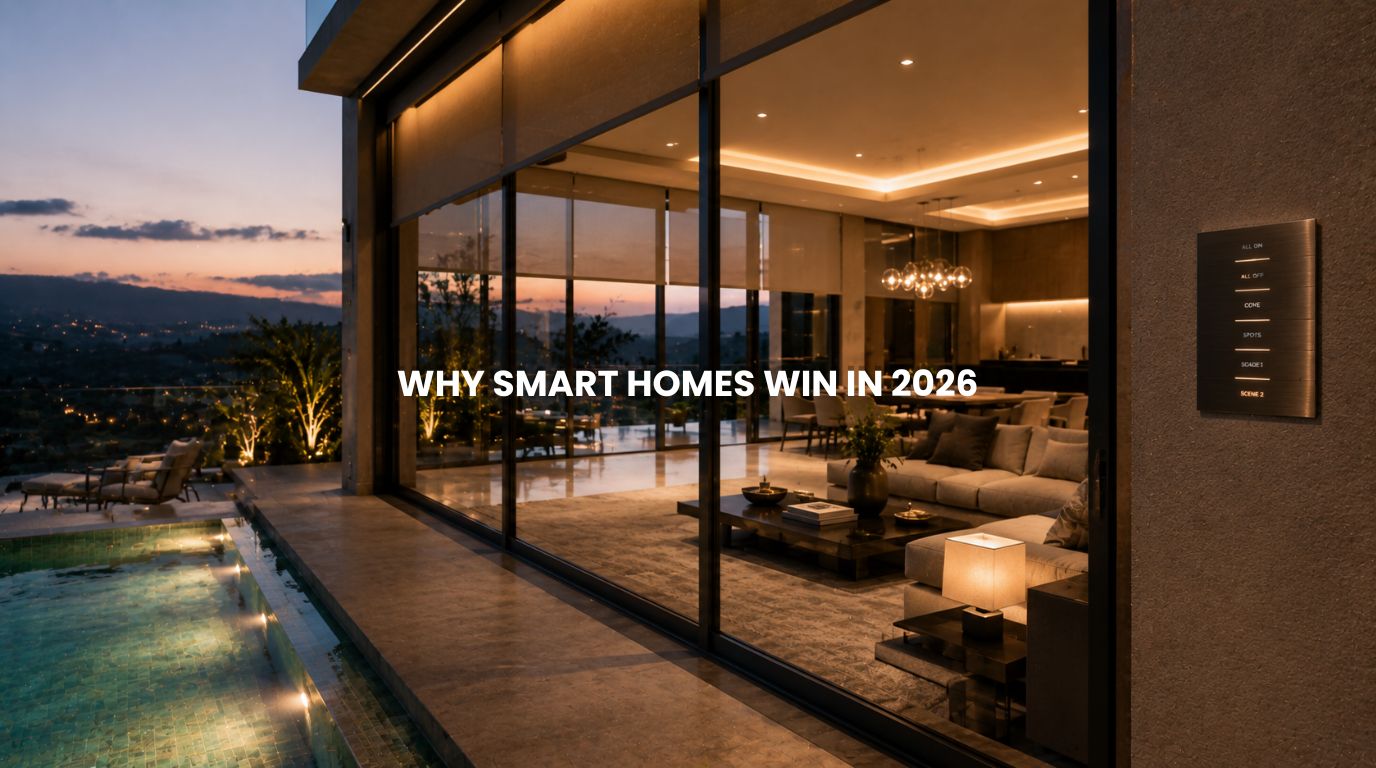
The primary advantages of smart home automation in 2026 center on transforming properties into hyper-efficient, self-securing, and high-yielding structural assets. Moving far past disjointed gadget setups, an integrated smart home infrastructure unifies HVAC, lighting, security, and shading under a singular local logic layer. Implementing an open, hardwired automation standard (such as KNX) systematically reduces overall household energy consumption by 30% to 50%, eliminates device latency, and safeguards families against grid voltage surges, permanently increasing a luxury property’s operational lifespan and resale valuation.
The Infrastructure Mandate: Why Disconnected Gadgets Lose in Modern Real Estate
Residential properties have officially outgrown the consumer tech experimental phase. If you look at the premium housing market across major hubs like Navi Mumbai, Nashik, or Lonavla, the definition of a “smart home” has radically shifted. It no longer means sticking a couple of voice-controlled retail plugs into a wall or screwing in basic color-changing bulbs that freeze whenever your internet service provider acts up. To truly appreciate the foundational advantages of smart home automation, one must look past temporary retail tech.
The core issue is that piecemeal, wireless DIY tech creates high mechanical friction inside modern luxury architecture. Thick reinforced concrete structural slabs, dense brick masonry, and high-performance metallic glass coatings block airborne radio signals, resulting in dropped commands and laggy automation performance.
Furthermore, relying on multiple standalone software apps creates an exhausting digital ecosystem for your family. Achieving the true advantages of smart home automation demands a complete migration toward unified building intelligence—treating automation as an essential, invisible utility that operates natively from your core electrical panel rather than floating temporarily on a fragile wireless cloud mesh.
What are the most significant operational advantages of smart home automation?
The most significant operational advantages of smart home automation are centralized multi-system coordination, automated energy resource conservation, and local, cloud-independent system safety. When analyzing the structural advantages of smart home automation, grounding your property’s mechanics in a hardwired open protocol allows you to convert individual electronic loads into an interconnected, low-maintenance building utility.
Unified Multi-System Cross-Communication
In a standard luxury build, major sub-systems function as isolated electrical islands. Your central VRF cooling compressors, underfloor heating panels, architectural motorized shading, and DALI-2 light dimmers have no way of speaking to one another, frequently working in opposition and inflating your operating costs.
One of the greatest advantages of smart home automation is the unification of these moving pieces. A single command from a minimalist wall keypad can simultaneously drop motorized blinds, dim ambient downlights to exact lux levels, and engage pre-calculated climate setbacks, ensuring total operational synergy.
Total Separation from Volatile Cloud Servers
Relying on internet connectivity to change a light setting or arm a perimeter alarm is a severe structural liability. Enterprise-grade networks deliver the true advantages of smart home automation by operating entirely offline, running on an air-gapped local bus network with onboard microprocessors built into each individual module. If your incoming fiber-optic internet connection drops or an external software server goes completely dark, your home’s local automation infrastructure continues to execute commands instantly with sub-10 millisecond response speeds.
How does home automation lower monthly villa operating costs?
Home automation systematically lowers monthly operating costs by cutting total whole-home energy consumption by 30% to 50% through presence-driven climate setbacks, closed-loop daylight harvesting, and the absolute elimination of standby electrical loads. These long-term financial returns highlight why the economic advantages of smart home automation appeal so strongly to modern estate owners. These integrated micro-routines ensure your property draws grid current on an on-demand basis rather than wasting power continuously.
Presence-Driven HVAC Setback Optimization
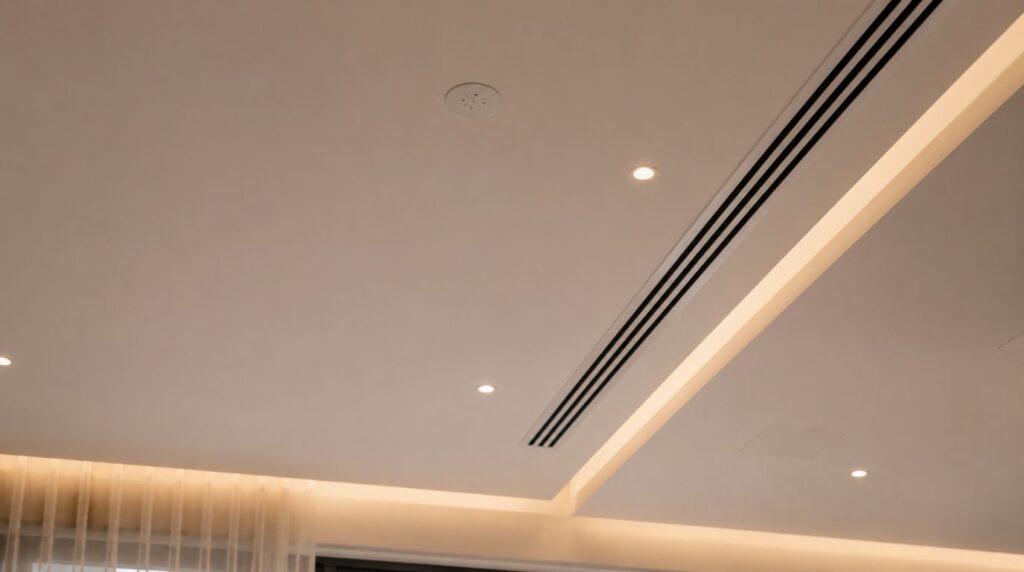
Because heating and cooling represent the absolute largest electricity drain inside premium Indian properties, optimizing these mechanical systems yields massive financial returns. I program high-precision ceiling presence tracking matrices to interact directly with your central climate zones, maximizing the cost-saving advantages of smart home automation.
When a formal living hall or guest suite remains empty for over ten minutes, the local automation system automatically shifts that specific zone’s target temperature upward by 2°C to 3°C. This automated adjustment prevents compressor overworking and slashes daily HVAC utility overheads by up to 50%.
Daylight Harvesting and Relay-Level Load Shedding
Traditional manual dimming loops or cheap wireless toggle switches keep architectural lights burning at full intensity even when bright afternoon sunlight fills a room. To capture the full environmental advantages of smart home automation, my designs implement closed-loop lux tracking, where ceiling sensors continuously monitor ambient light reflection and dim high-output LED drivers in real-time to match natural daylight cycles, lowering lighting bills by up to 60%.
Additionally, when you tap a “Master Away” scene at your entrance, heavy-duty panel-mounted isolation relays physically sever the power feeds to non-essential appliances, dropping standby “vampire” power leaks to absolute zero and reinforcing the distinct advantages of smart home automation.
Why does a hardwired automation network maximize long-term property valuation?
A hardwired automation network maximizes long-term property valuation because it is classified as a permanent structural asset—an engineered building utility built to match the 30+ year lifespan of your property’s physical concrete foundation. Loose consumer electronic gadgets and retrofitted wireless modules add zero capital worth during a luxury real estate appraisal, as buyers view them as temporary, rapidly aging tech clutter. The capital appreciation properties enjoy stems directly from the permanent advantages of smart home automation.
Eliminating the 3-to-5-Year Software Obsolescence Window
Consumer wireless smart hardware is engineered around a short commercial electronics lifecycle. If a mass-market brand decides to modify its cloud service protocol, alter its corporate focus, or stop updating its proprietary mobile app, your entire investment in those switches faces sudden obsolescence.
By contrast, the structural advantages of smart home automation are preserved through an open, standardized hardwired infrastructure framework (such as KNX) supported by over 500 independent international manufacturers. If one component requires replacement decades down the line, a module from a completely different brand can be snapped onto the distribution rail as a direct, seamless match, permanently preserving your foundational capital asset.
The Eradication of Internal Circuit Maintenance Overheads
A sprawling luxury estate can easily scale to include 100 to 200 distinct automated nodes, including multi-zone climate sensors, motorized drape tracks, and security contacts. If these points run on wireless networks, they require independent battery cells, forcing you or your technical team into a continuous cycle of tracking dropped connections and changing dead lithium batteries hidden inside ceilings.
By pulling a safe, low-voltage shielded green bus cable alongside your high-voltage mains power lines during the raw construction phase, you supply continuous local power to every device. This maintenance-free layout remains one of the finest operational advantages of smart home automation.
Engineering Breakdown: Consumer Gadgets vs. Architectural Infrastructure
| Architectural & Technical Metric | Conventional Luxury Home | Consumer Wireless Setup | Hardwired Industrial Plan (KNX) |
| Average Whole-Home Energy Savings | Baseline (0% reference point) | 5% to 12% (Highly inconsistent) | 30% to 50% (Verified operational data) |
| System Signal Integrity | Manual control dependencies | Subject to concrete radio shielding | Pristine physical cable transmission |
| Core Operational Architecture | Standalone analog switches | Central cloud master hub dependency | 100% Decentralized flash memory |
| Command Response Latency | Immediate manual mechanical click | Highly variable (Dependent on Wi-Fi/Cloud) | Guaranteed sub-10 millisecond execution |
| Hardware Operating Lifespan | Long-term wear on manual plates | 3 to 5 years (Rapid product aging) | 30+ Years (Industrial grade durability) |
| Long-Term Real Estate Asset Value | Standard baseline evaluation | Negligible / Viewed as temporary add-on | High (Valued as permanent structural asset) |
Protecting Your Electronics: Centralized Panel-Level Grid Surge Resilience
In major Indian metropolitan areas and rural vacation landscapes, the single most dangerous millisecond for your home’s luxury infrastructure is the exact second municipal power returns after a blackout. The abrupt, volatile current surge can instantly fry the highly sensitive internal circuit boards of imported kitchen appliances, variable refrigerant flow (VRF) air conditioning compressors, and high-end LED drivers.
The protective advantages of smart home automation eliminate this massive hardware risk by building intelligent power recovery logic directly into our centralized electrical distribution panels. Instead of allowing the property to draw full load current all at once upon power restoration, the hardwired automation actuators safely delay and stagger high-load electrical loops online, sequence-by-sequence over several seconds, protecting your expensive electronics from terminal damage.
Elevating Your Estate from a House of Moving Parts to an Invisible Legacy
Building or renovating a premium estate is a labor of love intended to establish a peaceful, permanent sanctuary for your family. If your automated systems routinely force you to debug frozen wireless routers, apologize to visiting guests for unresponsive switches, or pay ongoing technical fees to replace dead batteries inside your walls, the technology has transformed from a premium convenience into an operational liability.
At Techtastic, we don’t look at home automation through a superficial retail lens. We engineer robust, industrial-grade building backbones that leverage the true advantages of smart home automation, treating technology as an enduring architectural asset akin to world-class MEP engineering. We handle the hidden low-voltage pathways, physical panel dynamics, and hardware interlocks that allow you to stop managing your home’s technology and finally start experiencing true environmental comfort.
🤝 The Partnership Corner
- For Luxury Property Owners: We step directly into your raw design phase to engineer an unshakeable, offline-first automation blueprint that eliminates long-term technical surprises, battery tracking, and expensive civil reworks.
- For Premium Architects & MEP Consultants: We collaborate seamlessly during your gray-structure phase, providing precise electrical wiring schematics, conduit maps, and panel calculations to keep your physical layouts immaculate.
Let’s build a digital foundation engineered to endure for generations.
📞 Call/WhatsApp: 9769145145
📍 Engineering Unshakeable Reliability Across: Navi Mumbai | Nashik | Lonavla | Sangli
Technical FAQs on Advantages of Smart Home Automation
Q: What is the main advantage of an open-protocol hardwired automation standard over wireless setups?
A: A hardwired system (like the international KNX standard) eliminates airborne radio signal drops caused by thick reinforced concrete walls by routing all data through a physical, low-voltage green bus cable. Operating entirely offline without central master hubs or cloud servers, it delivers sub-10 millisecond execution speeds, avoids software obsolescence, and carries an industrial lifecycle of 30+ years.
Q: How does a professionally integrated smart home system lower utility overheads?
A: The system reduces your overall energy footprint by 30% to 50% by linking separate sub-systems like HVAC, lighting, and shading over a singular control layer. It automatically triggers temperature setbacks in empty zones, dims architectural lighting using constant daylight harvesting loops, and cuts power to non-essential circuits via panel relays to stop vampire standby power drain.
Q: Can home automation protect expensive imported appliances and lighting from electrical spikes?
A: Yes. Centralized hardwired automation panels feature heavy-duty choke filters and isolation relays that absorb voltage fluctuations from the local municipal grid. Furthermore, we program the system to execute intelligent power recovery paths following a blackout, gently staggering high-load circuits online over several seconds to prevent destructive inrush current surges.