
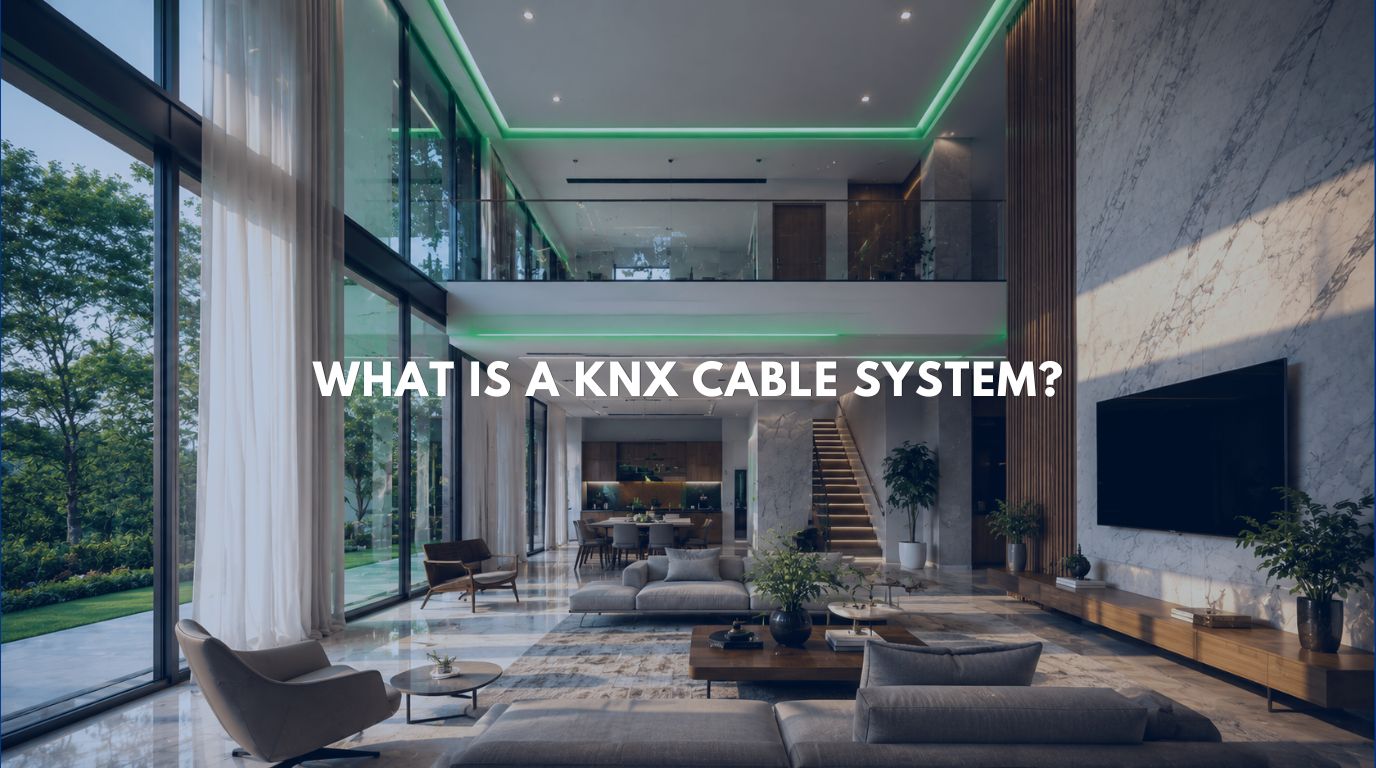
Summary
A KNX cable system is a special, shielded twisted-pair cable, usually green. It acts as the “nervous system” for professional smart buildings.
Unlike standard wiring or Wi-Fi, it lets sensors, actuators, and controllers talk directly. It does not need a central server. It ensures 100% reliability, prevents signal interference, and provides a future-proof backbone that lasts for decades.
By using a decentralized wired standard, a KNX cable system reduces smart home lag. They also keep your building running even if the internet fails.
The Ghost in the Walls: Why Your “Smart” Building is Acting Dumb
I once stood in a newly completed luxury office in Navi Mumbai where the lights simply refused to turn on. The owner had invested millions in high-end fixtures and a “smart” wireless system, but the thick reinforced concrete walls were swallowing the Wi-Fi signals whole. Every time someone used the microwave in the pantry, the boardroom shades would glitch and freeze.
This is what I call the “Digital Exile.” You paid for a cutting-edge facility, yet you’re essentially stuck in a building you can’t manage. The “Industry Wound” claims that you can reliably do professional-grade automation without wires. Consumer-grade gadgets have convinced us that “wireless is easier,” but for a permanent building, wireless is a fragile thread that breaks under pressure.
The truth? A building is a permanent structure; it deserves a permanent, physical nervous system. That nervous system is the KNX cable system.
What is a KNX Cable System and How Does It Work?
A KNX cable system is a standardized bus line, typically identified by its distinctive green jacket, that carries data between smart devices using a low-voltage, “twisted-pair” architecture. Instead of each light or sensor needing a direct line to a central “brain,” every device sits on this single green “bus” and talks to every other device simultaneously.
The Decentralized Magic
In a traditional “smart” setup, if the central hub or the Wi-Fi router crashes, the whole house goes dark. A KNX cable system decentralizes the logic. This means the “smarts” are inside the switches and the lights themselves. If one device fails, the rest of the green thread stays alive, and your building continues to function.
Shielding Against the Noise
Buildings today are packed with “electrical noise” from high-voltage cables and machinery. Standard data cables often pick up this interference, leading to ghost commands or lag. Manufacturers specifically shield the KNX cable system so it can run alongside power lines without losing a single bit of data, ensuring that when you press a button, you get an instant response—every single time.
Why is a Wired KNX Backbone Better Than Wi-Fi for Professional Buildings?
A wired KNX backbone is superior to Wi-Fi because it provides a dedicated, interference-free physical path for commands, ensuring 100% uptime regardless of internet connectivity or wall thickness. While Wi-Fi signals struggle with “dead zones” and signal congestion in large estates, the KNX cable system provides a stable, “heartbeat” connection that never drops.
Breaking the Battery Cycle
Wireless sensors are “maintenance vampires.” They require battery changes every 6–12 months. In a large commercial building or a 10,000-square-foot bungalow, you could spend your entire weekend just replacing batteries. A KNX cable system provides the small amount of power these sensors need directly through the wire, meaning you install it once and forget it for 30 years.
Security That Can’t Be Hacked from the Curb
Wireless signals can be intercepted or jammed from outside the property. Because the “green thread” inside your walls physically contains a KNX system, attackers find it significantly harder to compromise. For high-security environments in Lonavla or Sangli, this “air-gapped” physical reliability is the only acceptable standard.
Is the KNX Cable System Future-Proof for The Next 30 Years of Technology?
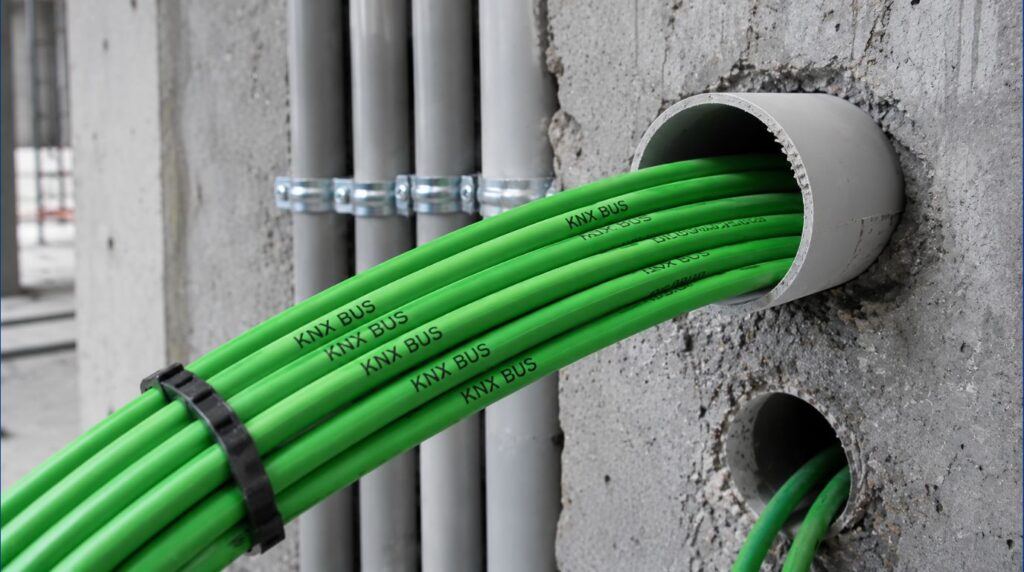
Yes, the KNX cable system is the most future-proof infrastructure available because it is an open global standard supported by over 500 different manufacturers worldwide. This means you are never “locked in” to a single brand; a KNX cable system installed in 2026 will still be able to communicate with a KNX device released in 2056.
The “Interoperability” Guarantee
Most smart brands are “closed loops.” If that company goes out of business, your expensive “smart” home becomes a pile of electronic scrap. KNX is different. You can have a German sensor, a French controller, and an American interface all sitting on the same green cable, speaking the same language.
The Hidden Asset Value
When you sell a property, a “wireless” smart home is often seen as a liability—something that will soon be obsolete. However, people see a KNX-wired building as a permanent utility, like high-quality plumbing or a robust electrical grid. It adds tangible, long-term value to the architectural heritage of the building.
How Does The “Green Bus” Reduce Maintenance Costs in Large Estates?
The “Green Bus” reduces maintenance costs by allowing for remote diagnostics and eliminating the need for periodic hardware resets or battery replacements. Because the system is hardwired, there are no “signal drops” to troubleshoot, and the centralized equipment rack allows technicians to update or fix the entire building from one single point.
Self-Healing Infrastructure
At Techtastic, we design systems that monitor their own health. If a device on the KNX cable system starts acting up, the system can send an alert before you even notice a problem. This proactive approach is the difference between a “gadget” and a professional utility.
Energy Efficiency at the Logic Level
Large estates in regions like Nashik or Navi Mumbai often bleed money through inefficient cooling and lighting. Because the KNX cable system links every sensor (presence, light, temperature), the building can “think” for itself. It can dim the lights when the sun is bright or cut the AC in the guest wing when no one is there, paying for the cost of the cable through energy savings alone.
From Maintenance to Legacy: The Techtastic Truth
We don’t just sell cables; we install peace of mind. Choosing a KNX-wired backbone is a decision to move from being a “Villa Manager” to being a “Villa Guest”. It ensures that the technology in your walls is as enduring as the stone and timber of the building itself.
If you are currently at the “Gray Structure” stage of your project in Maharashtra, now is the time to lay the green thread.
🤝 The Partnership Corner
At Techtastic, we believe that the best smart homes are built on collaboration, not just cables. We specialize in providing the technical “backbone” that allows your creative vision to shine.
- For Architects: We create wiring schematics that keep your minimalist designs free of “switchboard bloat.”
- For MEP Consultants: We ensure the KNX integration aligns perfectly with your HVAC and lighting loads for maximum efficiency.
Let’s build a backbone that lasts.
📞 Call/WhatsApp: 9769145145
📍 Service Areas: Navi Mumbai | Nashik | Lonavla | Sangli
Technical FAQs on KNX Cable System
Q: What is a KNX cable system and how does it work?
A: It is a standardized, shielded twisted-pair bus line that carries data between smart devices. It works by allowing every device in a building to communicate directly on a decentralized “bus” without needing a central server or Wi-Fi.
Q: Why is a wired KNX backbone better than Wi-Fi for professional buildings?
A: Wired systems provide 100% reliability, zero interference from other electronics, and zero latency. They eliminate the need for batteries and ensure the building functions even if the internet or router fails.
Q: Is the KNX cable system future-proof for the next 30 years of technology?
A: Yes. As an open global standard supported by 500+ manufacturers, it ensures that devices from different decades and brands can all work together on the same wiring, preventing obsolescence.