
Summary
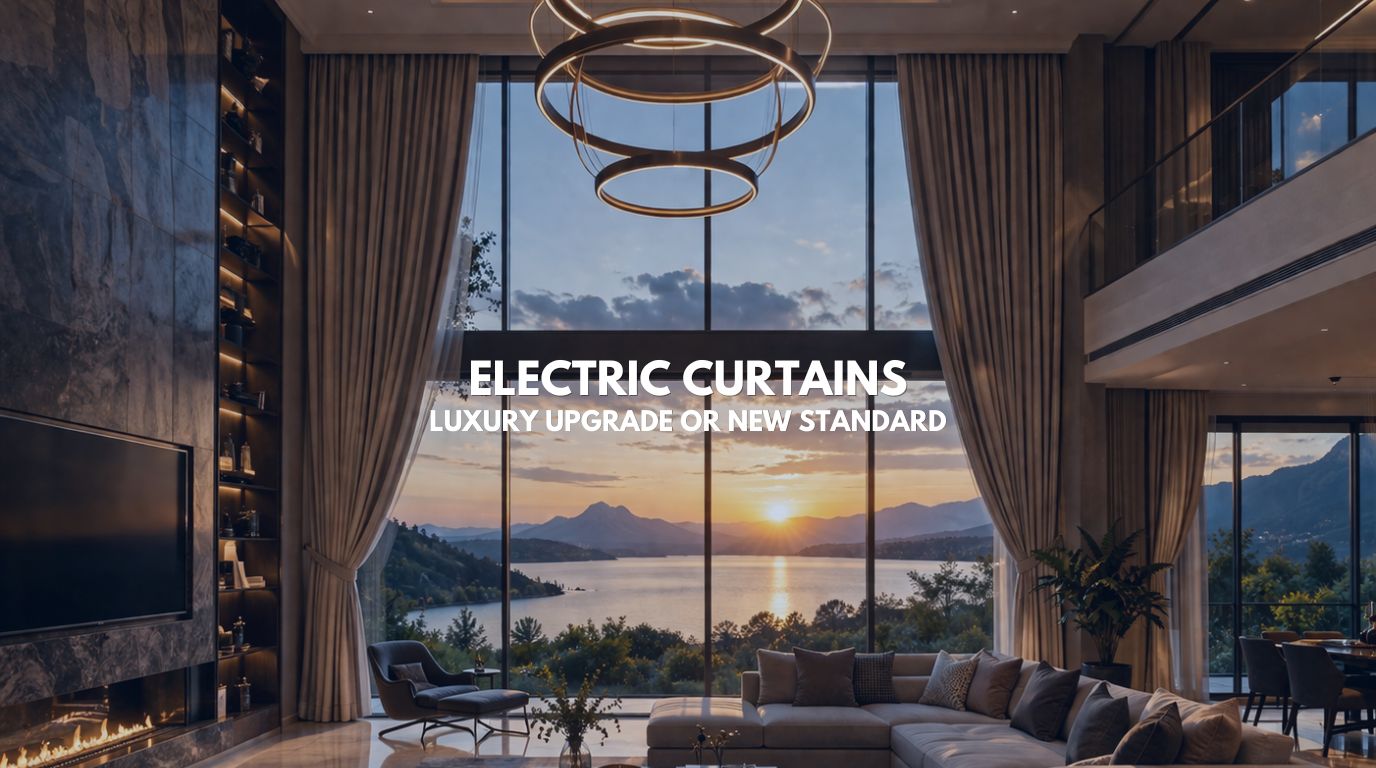
The debate over electric curtains has shifted from “extravagant luxury” to an “essential design standard.” Manual operation is impractical for the large glass walls and high windows found in modern architecture.
This guide explores how motorized window treatments transition from a comfort feature to a functional necessity. We explore how solar-tracking saves energy, why high-end interiors use silent motors, and why architects now prioritize electric curtains during early planning. Whether for privacy, protection of expensive interiors, or pure convenience, electric curtains are redefining the modern Indian home.
Electric Curtains: A Luxury Upgrade or the New Standard in Modern Design?
I remember visiting a newly finished villa in Lonavla last year. The living room’s double-height glass walls offered a stunning valley view. But as the afternoon sun began to pour in, the heat became unbearable.
The homeowner looked at the heavy, twelve-foot-high designer drapes and sighed. To close them manually, someone had to physically walk over, tug on a cord, and wrestle with the weight of the fabric.
In that moment, it was clear: those curtains weren’t just a window covering; they were a barrier to enjoying the space.
When I talk to architects and homeowners in Nashik or Navi Mumbai today, the conversation around motorized window treatments has changed. We aren’t just discussing a “cool gadget” to show off to guests.
We are discussing a fundamental shift in how we design and live in our homes. So, is it a luxury upgrade? Or has it become the new standard?
The Shift from Manual to Mindful Design
In the past, electric curtains were seen as something you’d only find in five-star hotels or sprawling mansions. They were synonymous with excess. But modern design has evolved. We now prioritize natural light, open floor plans, and massive glass facades.
When you have windows that are ten or fifteen feet high, manual curtains are no longer an “option”—they are a chore. A “Standard” in design is something that solves a modern problem efficiently. Electric curtains solve the problem of scale, accessibility, and environmental control in a way that manual tracks simply cannot.
1. Protecting Your Interior Investment
We spend lakhs on Italian marble, customized teak furniture, and high-end upholstery. The biggest enemy of these materials? UV rays. In India, the harsh afternoon sun can fade a designer sofa or yellow a white marble floor in just a few seasons.
The “New Standard” approach uses Sun-Tracking Automation. Instead of you having to remember to close the drapes, your smart home system does it for you. Sensors detect when the sun’s intensity hits a certain threshold and gently glide the curtains shut. You aren’t just buying a motor; you are buying an insurance policy for your interior design.
2. The Silent Symphony: Aesthetics and Motion
In high-end design, the “clatter” of rings on a metal rod feels out of place. Manufacturers design modern motorized tracks for near-silent operation.
The motion itself is a design element. Synchronized curtains with “soft-start” and “soft-stop” mechanisms add sophistication to any room. It’s a “Standard” of experience that once you’ve witnessed, manual tugging feels primitive.
3. Energy Efficiency: The Hidden ROI
We often discuss smart home tech as an expense, but electric curtains are one of the few upgrades that actually pay you back. Automating your drapes to close during peak heat significantly reduces the “greenhouse effect” inside your home.
When your curtains act as a thermal barrier, your air conditioning doesn’t have to work as hard. I’ve seen bungalows in Navi Mumbai reduce their cooling loads by nearly 20% just by implementing a clever curtain routine. In a world focused on sustainable and “green” building standards, this isn’t luxury—it’s smart engineering.
4. Privacy as a Routine
In dense urban environments like Mumbai or Delhi, privacy is a fleeting luxury. But a smart home makes it a standard. You can program your bedroom drapes to close automatically at sunset or when you turn on the room lights.
It’s about the “First Impression” of your home. You don’t want to walk around your house closing ten different sets of curtains every evening. You want to press a “Goodnight” button or simply let the clock trigger a “Privacy Scene.”
5. Accessibility for Everyone
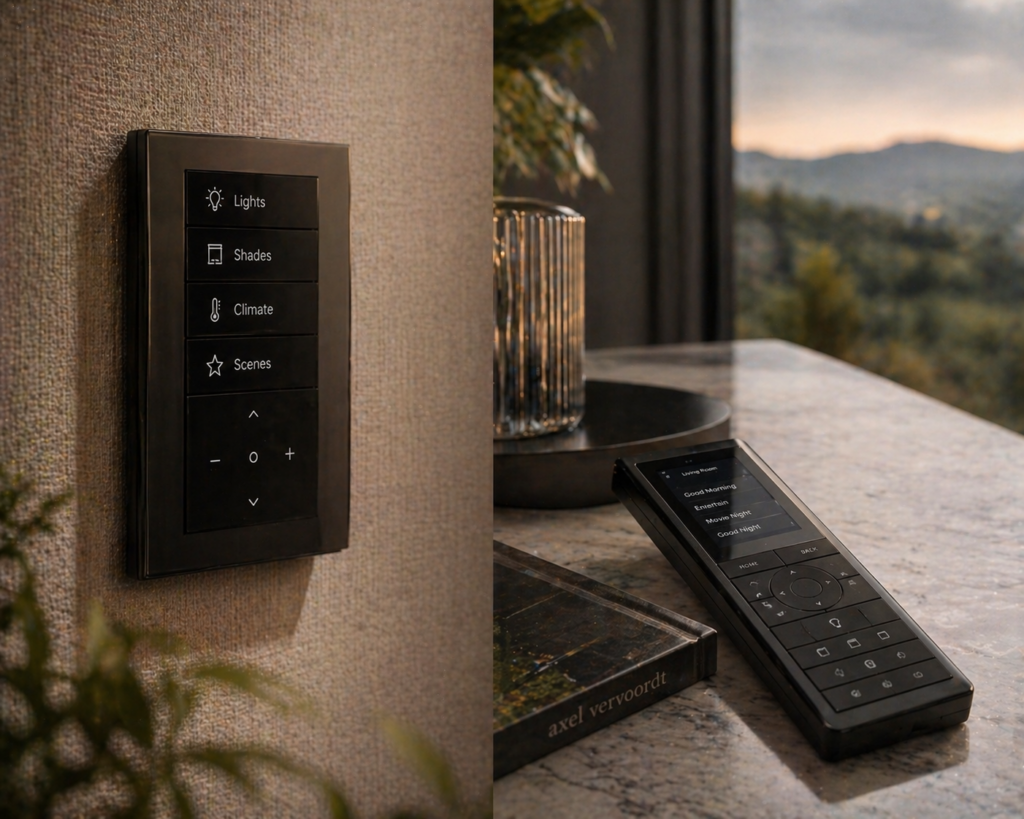
Modern design should be inclusive. For elderly family members or those with limited mobility, pulling heavy, floor-to-ceiling drapes can be physically taxing. Standardizing electric curtains lets everyone control their environment easily via wall switches, remotes, or voice commands.
Why Planning Early is the Real Secret
I always tell architects: The motor is easy; the infrastructure is the challenge.
Plan for electric curtains during the gray structure phase to ensure they feel like a standard feature rather than an afterthought.
- The Curtain Pocket: Designing a hidden niche in the ceiling so the motor and track are completely invisible.
- The Power Point: Ensuring there is a concealed electrical point at the end of every window.
- The Hybrid Backbone: Using a hybrid smart home system so that your curtains can talk to your AC and your lighting.
Final Thoughts
So, back to our original question: Luxury upgrade or new standard?
Motorized tracks cost more upfront, but energy savings and convenience quickly offset the price. As modern Indian homes use more glass, electric curtains have shifted from a luxury to a necessity. They are the essential finish that makes a modern house actually feel like a home.
Do you have a window in your home right now that stays “permanently closed” because it’s too much of a hassle to reach? Let’s change that.
Collaboration Opportunities for Builders and Architects
I work with developers, architects, and interior designers to enhance residential projects by integrating smart home technology during the planning and design stages. My team ensures that automation aligns seamlessly with your design layouts, electrical infrastructure, and interior concepts.
I invite you to partner with Techtastic to implement high-quality smart home devices for your upcoming projects in Nashik, Navi Mumbai, Sangli, and Lonavla.
Contact today at 9769145145 for a professional consultation to see how an expert home automation system can elevate your design vision.
Technical FAQs on Electric Curtains
Q: Are electric curtains noisy?
A: Not the high-end ones. Professional-grade motors operate at less than 35 decibels—roughly the sound of a whisper. In a quiet room, you’ll hear a gentle, rhythmic hum that most people find satisfying.
Q: What happens if the power goes out?
A: Most modern motorized tracks have a “Manual Override” or “Touch Motion” feature. If the power is out, you can still pull the curtain gently by hand, and it will slide like a regular manual curtain. Once power returns, the motor “remembers” its limits.
Q: Do I have to use special fabric for electric curtains?
A: No. You can use almost any fabric—from sheer silks to heavy velvets. The only thing that changes is the motor’s torque. We select the motor based on the total weight of your chosen fabric.
Q: Can I automate existing manual curtains?
A: Yes, through retrofitting. While new tracks work best, our “Retrofit Motors” attach to existing rods or tracks without requiring you to change your drapes.
Q: Can I control the electric curtains with my phone?
A: Absolutely. Whether you use an app, keypad, or voice assistant, a hybrid system ensures you have control from anywhere.