
If you’ve ever walked into a home where the lights turn on automatically, the curtains open with the sunrise, or the air conditioner adjusts itself before you arrive, you’ve already experienced the power of a home automation system. While these features may seem futuristic, they are becoming increasingly common in modern homes across India.
Many homeowners assume a home automation system is simply a collection of smart gadgets like voice assistants, smart bulbs, or Wi-Fi plugs. In reality, a professional automation solution is much more sophisticated. It is an intelligent ecosystem where every device communicates with one another to create a seamless living experience.
At Techtastic, we design and install premium home automation system solutions for luxury residences, villas, apartments, and commercial spaces across Mumbai, Navi Mumbai, Pune, Lonavala, Nashik, and Sangli. Over the years, we’ve found that the best automation projects are not the ones with the most gadgets but the ones designed around the homeowner’s lifestyle.
Whether you’re building a new home or upgrading an existing one, understanding how a home automation system actually works will help you make smarter decisions and avoid costly mistakes. In this guide, we’ll explain the technology behind smart homes in simple terms, compare wired and wireless systems, and show you why professional automation delivers a completely different experience than buying standalone smart devices.
Quick Answer
A home automation system works by connecting sensors, controllers, and smart devices into one intelligent network. Sensors collect information, controllers process it using programmed logic, and actuators perform actions like turning on lights, adjusting air conditioning, opening curtains, or activating security systems, all automatically or with a single command.
Quick Summary
✔ A home automation system connects all your smart devices into one intelligent ecosystem.
✔ Every system works through three stages: Sense, Process, and Act.
✔ Sensors collect information while controllers make decisions.
✔ Actuators carry out commands such as switching lights or moving curtains.
✔ Wired KNX systems offer greater reliability for luxury homes.
✔ Wireless automation works well for apartments and retrofit projects.
✔ Local processing ensures your home continues functioning even during internet outages.
What Is a Home Automation System?
A home automation system is an integrated platform that allows different electrical and electronic devices in your home to communicate with one another. Instead of controlling each appliance individually, the system coordinates lighting, climate control, security, entertainment, motorized curtains, and other connected devices through a centralized ecosystem.
Unlike standalone smart gadgets that operate independently, a professional home automation system creates intelligent interactions between multiple devices. It doesn’t simply respond to commands but anticipates your routine and automates repetitive tasks based on schedules, occupancy, environmental conditions, or customized scenes.
For example, when you leave home, one command can switch off unnecessary lights, turn off the air conditioner, close the curtains, activate the security system, and lock selected doors simultaneously.
This level of coordination is what separates a complete home automation system from a house filled with individual smart products.
Why More Homeowners Are Choosing a Home Automation System
Smart living has evolved significantly over the past few years. Homeowners are no longer looking for isolated smart devices; rather, they want complete automation that simplifies daily life.
Some of the biggest reasons people invest in a home automation system include:
| Benefit | How It Helps |
|---|---|
| Convenience | Control multiple systems from one interface. |
| Energy Efficiency | Reduce unnecessary electricity consumption. |
| Security | Monitor and protect your home remotely. |
| Comfort | Personalized lighting, temperature, and entertainment scenes. |
| Property Value | Increase the appeal of premium homes. |
| Future Expansion | Easily add more smart devices over time. |
Rather than constantly using different apps or remote controls, homeowners prefer an intelligent platform that manages everything together.
How a Home Automation System Actually Works
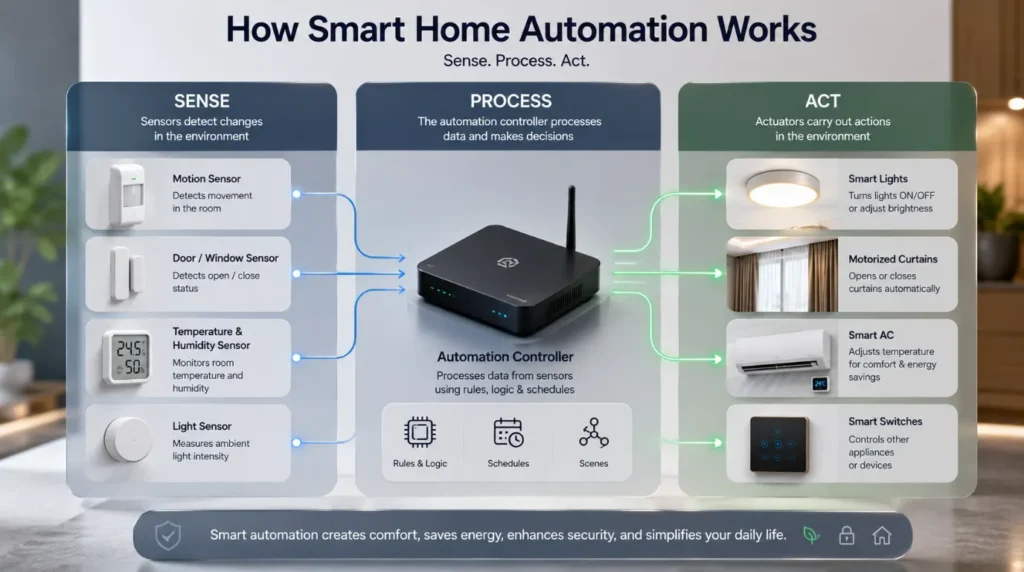
Although a smart home appears effortless from the outside, there’s a sophisticated process happening behind every automated action.
Every home automation system follows the same three-step workflow:
- Sense
- Process
- Act
Think of it as the nervous system of your home.
1. Sensors: The Eyes and Ears of Your Home
Modern sensors work together within a home automation ecosystem. Every intelligent action begins with collecting information.
Sensors constantly monitor what’s happening inside and outside your home. They don’t control appliances directly, but they simply gather data and send it to the automation controller.
Some of the most common sensors include:
Motion & Presence Sensors
These detect when someone enters or leaves a room.
Instead of leaving lights on unnecessarily, the home automation system can automatically illuminate occupied areas while switching lights off in empty spaces.
Temperature Sensors
These monitor room temperatures throughout your home.
Rather than maintaining one fixed temperature all day, the system adjusts cooling or heating according to occupancy, weather, and personal preferences.
Light (Lux) Sensors
Natural daylight changes throughout the day.
Light sensors measure available sunlight and allow the home automation system to adjust artificial lighting accordingly, improving comfort while reducing electricity consumption.
Door & Window Sensors
These detect whether doors or windows are open or closed.
They can trigger notifications, activate security systems, or prevent your air conditioner from operating when windows are left open.
Water & Smoke Sensors
Modern automation also improves safety.
Water leak sensors help prevent costly damage, while smoke detectors immediately notify homeowners and activate emergency routines if required.
2. Controllers: The Brain Behind Every Decision
A premium automation controller coordinates lighting, climate, security, and entertainment systems. Collecting information alone isn’t enough.
Every home automation system requires a controller that receives data from sensors, analyzes it, and decides what action should happen next. This controller acts as the brain of your smart home.
Depending on your automation platform, this intelligence may exist in:
- A central automation processor
- A smart hub
- Decentralized KNX controllers
- Cloud-based platforms
- Local automation servers
The controller continuously evaluates conditions using programmed logic. The homeowner doesn’t need to touch a switch; the home automation system automatically responds based on predefined conditions.
Why KNX Works Differently
Unlike many wireless platforms that rely on one central hub, KNX distributes intelligence throughout the installation.
Each device contains its own programming. If one device develops a fault, the rest of the home automation system continues operating normally.
This decentralized architecture is one of the reasons KNX remains the preferred automation standard for luxury villas, premium apartments, hotels, and commercial buildings worldwide.
3. Actuators: Where Automation Becomes Reality
Actuators control lights, curtains, appliances, and climate systems. After the controller makes a decision, someone or rather, something must act. This responsibility belongs to actuators.
Actuators are the physical devices that interact with electrical equipment throughout your home.
Common examples include:
Lighting Actuators
- Turn lights on or off.
- Adjust brightness levels.
- Create customized lighting scenes.
Curtain Controllers
Operate motorized curtains and blinds automatically according to schedules, sunlight, or personalized scenes.
Relay Modules
Control appliances such as:
- Water pumps
- Geysers
- Exhaust fans
- Outdoor lighting
Climate Controllers
Manage:
- Air conditioners
- HVAC systems
- Ventilation
- Heating
The seamless communication between sensors, controllers, and actuators allows a home automation system to function intelligently without constant user interaction.
4. Wired vs Wireless Devices in a Home Automation System
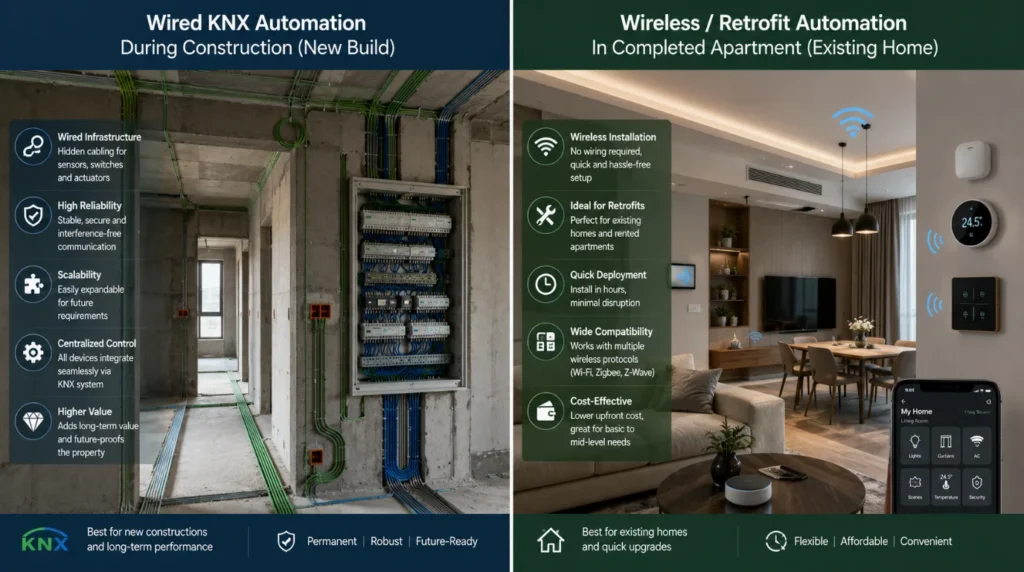
A home automation system is only as reliable as the communication between its devices. Whether you’re controlling lights, curtains, air conditioners, or security systems, every command must travel quickly and accurately.
Today, homeowners can choose between wireless and wired automation systems. Each has its advantages, but the right choice depends on your property, budget, and long-term goals.
| Feature | Wireless Home Automation System | Wired Home Automation System |
|---|---|---|
| Installation | Quick and easy | Best during construction |
| Initial Cost | Lower | Higher |
| Reliability | Good | Excellent |
| Maintenance | Battery replacement for some devices | Minimal |
| Speed | Depends on network quality | Instant and consistent |
| Scalability | Suitable for small to medium homes | Ideal for luxury homes and villas |
| Best For | Existing apartments | New homes and premium residences |
5. Cloud vs Local Control: Where Does the Intelligence Live?
One of the biggest differences between consumer smart gadgets and a professional home automation system is where the decision-making happens.
Cloud-Based Automation
In cloud-based systems, commands travel from your phone to an external server before returning to your home.
For example:
- You press a button.
- The request travels through the internet.
- The cloud server processes it.
- The command returns to your home.
- The light finally switches on.
If your internet connection is slow or unavailable, automation performance may suffer.
Local Automation
A professionally designed home automation system processes commands inside your home. The automation logic is stored within controllers and devices rather than depending on remote servers.
Benefits include:
- Faster response times
- Improved reliability
- Better privacy
- Reduced internet dependency
- Continued operation during internet outages
For luxury homes where reliability is critical, local control provides a far superior experience.
6. Smart Scenes: Where a Home Automation System Becomes Truly Intelligent
Many homeowners believe automation is simply controlling lights from a phone.
The real power of a home automation system lies in creating intelligent scenes that coordinate multiple devices simultaneously. Instead of operating each device separately, one command or no command at all can trigger several actions.
Good Morning Scene
Your home automatically:
- Opens motorized curtains.
- Gradually increases bedroom lighting.
- Turns on the geyser.
- Switches off bedroom air conditioning.
- Starts soft background music.
Leaving Home Scene
With one touch:
- All unnecessary lights switch off.
- Air conditioning turns off.
- Curtains close.
- Doors lock.
- Security system activates.
Movie Night Scene
One command can:
- Dim the lights.
- Close motorized curtains.
- Power on the projector.
- Start the AV receiver.
- Adjust room temperature.
These personalized scenes make a home automation system feel effortless because your home adapts to your lifestyle rather than waiting for manual commands.
7. Making Existing Devices Smarter
A common misconception is that every appliance must be replaced before installing a home automation system. In reality, many existing devices can be integrated without changing them completely.
Some popular integration methods include:
Dry Contacts
Allow the system to control gates, garage doors, pumps, and access systems.
IR Controllers
These mimic the signals from traditional remote controls, allowing older televisions, air conditioners, and entertainment systems to become part of your automation setup.
Smart Gateways
Gateways connect different technologies. For example, a KNX-based home automation system can communicate with Apple Home, Google Home, Amazon Alexa, or other smart ecosystems using compatible gateways.
This allows homeowners to enjoy voice control without sacrificing the reliability of professional automation.
Common Mistakes to Avoid
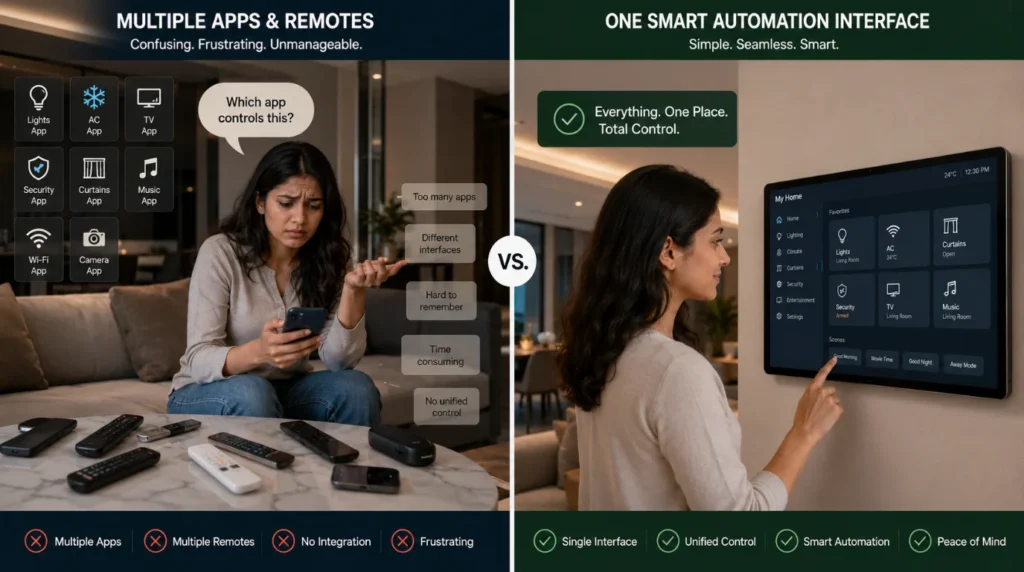
A successful home automation system is not just about buying expensive gadgets. Proper planning plays a much bigger role in long-term performance.
Avoid these common mistakes:
Waiting Until Construction Is Complete
Planning automation after interior work is finished often increases installation costs and limits design flexibility.
Choosing Closed Ecosystems
Some brands only allow their own products to work together. Open standards like KNX provide greater flexibility and easier future upgrades.
Buying Too Many Standalone Smart Devices
Multiple apps, separate remotes, and disconnected devices often create confusion instead of convenience. An integrated home automation system provides a much better user experience.
Ignoring Future Expansion
Even if you’re automating only lighting today, plan electrical infrastructure for future upgrades such as curtains, security, or home theatre.
Selecting Products Based Only on Price
Reliable automation depends on product quality, professional programming, and proper installation—not simply the cheapest hardware.
Our Recommendation
At Techtastic, we believe the best home automation system is one that quietly works in the background without requiring constant attention.
For homeowners upgrading an existing apartment, wireless automation can be an excellent starting point.
For luxury villas and new homes, however, we strongly recommend planning a wired KNX-based home automation system during construction. This approach delivers greater reliability, cleaner installations, easier maintenance, and long-term scalability.
Rather than filling your home with disconnected gadgets, invest in an automation platform that grows with your lifestyle and continues performing for years to come.
Key Takeaways
- A home automation system works through three stages: sensing, processing, and acting.
- Sensors collect information while controllers make intelligent decisions.
- Actuators carry out commands such as controlling lights, curtains, or appliances.
- Wireless systems are ideal for retrofits, while wired KNX systems offer maximum reliability.
- Local processing provides faster performance and greater privacy than cloud-only solutions.
- Smart scenes automate multiple actions simultaneously for greater convenience.
- Existing appliances can often be integrated without replacing them.
- Early planning results in cleaner installations and lower long-term costs.
- Open automation standards provide better flexibility and future expansion.
- Choosing a professionally designed home automation system ensures a smarter, more reliable home.
Frequently Asked Questions
1. What is a home automation system?
A. A home automation system is an integrated platform that connects lighting, climate control, security, entertainment, and other smart devices into one intelligent ecosystem. It allows these systems to communicate and operate automatically based on schedules, sensors, or user preferences.
2. How does a home automation system work?
A. A home automation system works through three main stages: sensors collect data, controllers process information using programmed logic, and actuators perform actions such as switching lights, operating curtains, or adjusting air conditioning.
3. Is a wired home automation system better than a wireless system?
A. Both have advantages. Wireless systems are suitable for existing homes because they require minimal installation. A wired home automation system, especially KNX, offers greater reliability, faster communication, and better scalability for new homes and luxury villas.
4. Can I install a home automation system in an existing home?
A. Yes. Modern retrofit solutions allow homeowners to install a home automation system without major renovations. Smart switches, wireless controllers, and automation gateways make upgrading existing homes much easier.
5. Does a home automation system work without the internet?
A. Many professional automation platforms continue functioning without internet access because they process commands locally. Remote access may be unavailable, but core automation features continue operating normally.
6. Does a home automation system save electricity?
A. Yes. A properly programmed home automation system can reduce energy consumption by automatically switching off unused lighting, optimizing air conditioning, controlling motorized curtains, and scheduling appliances more efficiently.
7. Can different brands work together in one home automation system?
A. Yes, especially when using open standards like KNX or Matter-compatible devices. These platforms allow products from multiple manufacturers to communicate within the same automation ecosystem.
8. Is a home automation system secure?
A. Professional systems use encrypted communication, secure local processing, and advanced authentication methods. Choosing reputable hardware and expert installation significantly improves system security.
9. When should I install a home automation system?
A. The ideal time is during construction or renovation because wiring and infrastructure can be planned from the beginning. Existing homes can also be automated using retrofit solutions.
10. Is a home automation system worth the investment?
A. Absolutely. A professionally designed home automation system improves convenience, comfort, energy efficiency, security, and property value while providing a future-ready living experience.
Collaboration Opportunities for Developers, Architects & Interior Designers
A successful home automation system begins long before the final switch is installed; it starts during the planning and design phase.
At Techtastic, we actively collaborate with:
- Architects
- Interior Designers
- Builders
- Real Estate Developers
- Project Management Consultants (PMCs)
- Luxury Villa Developers
Our team provides:
- KNX Home Automation Planning
- Smart Lighting Coordination
- Electrical Layout Reviews
- Structured Cabling Design
- Motorized Curtain Integration
- Home Theatre & AV Planning
- Smart Security Solutions
- Networking Infrastructure
- Future Expansion Planning
By involving Techtastic early, project teams can reduce rework, improve aesthetics, and deliver intelligent, future-ready homes.
Areas We Serve
Techtastic proudly delivers premium smart home automation solutions across:
- Mumbai
- Navi Mumbai
- Pune
- Lonavala
- Nashik
- Sangli
Whether you’re designing a luxury residence, renovating an apartment, or planning a commercial project, our team can create a customized automation solution that matches your lifestyle and project requirements.
Ready to Build a Smarter Home?
A well-designed home automation system should do more than control devices; it should simplify everyday living. From intelligent lighting and climate control to security, motorized curtains, entertainment, and networking, every element should work together seamlessly.
At Techtastic, we specialize in designing reliable, future-ready automation solutions tailored to modern homes and luxury residences. Our team works closely with homeowners, architects, builders, and interior designers from planning and design through installation and long-term support.
Whether you’re building your dream home or upgrading an existing one, we’re here to help you create a smarter, safer, and more comfortable living experience. Book a consultation today and discover the smartest way to make your home future-ready.
Contact Techtastic
🌐 Website: Techtastic Website
📞 Phone: 9769145145
📍 Service Areas: Mumbai • Navi Mumbai • Pune • Lonavala • Nashik • Sangli
Looking for practical ways to put home automation into action? Explore our guide on Home Automation Ideas: 8 Best Ways to Upgrade Your Home.