
Summary
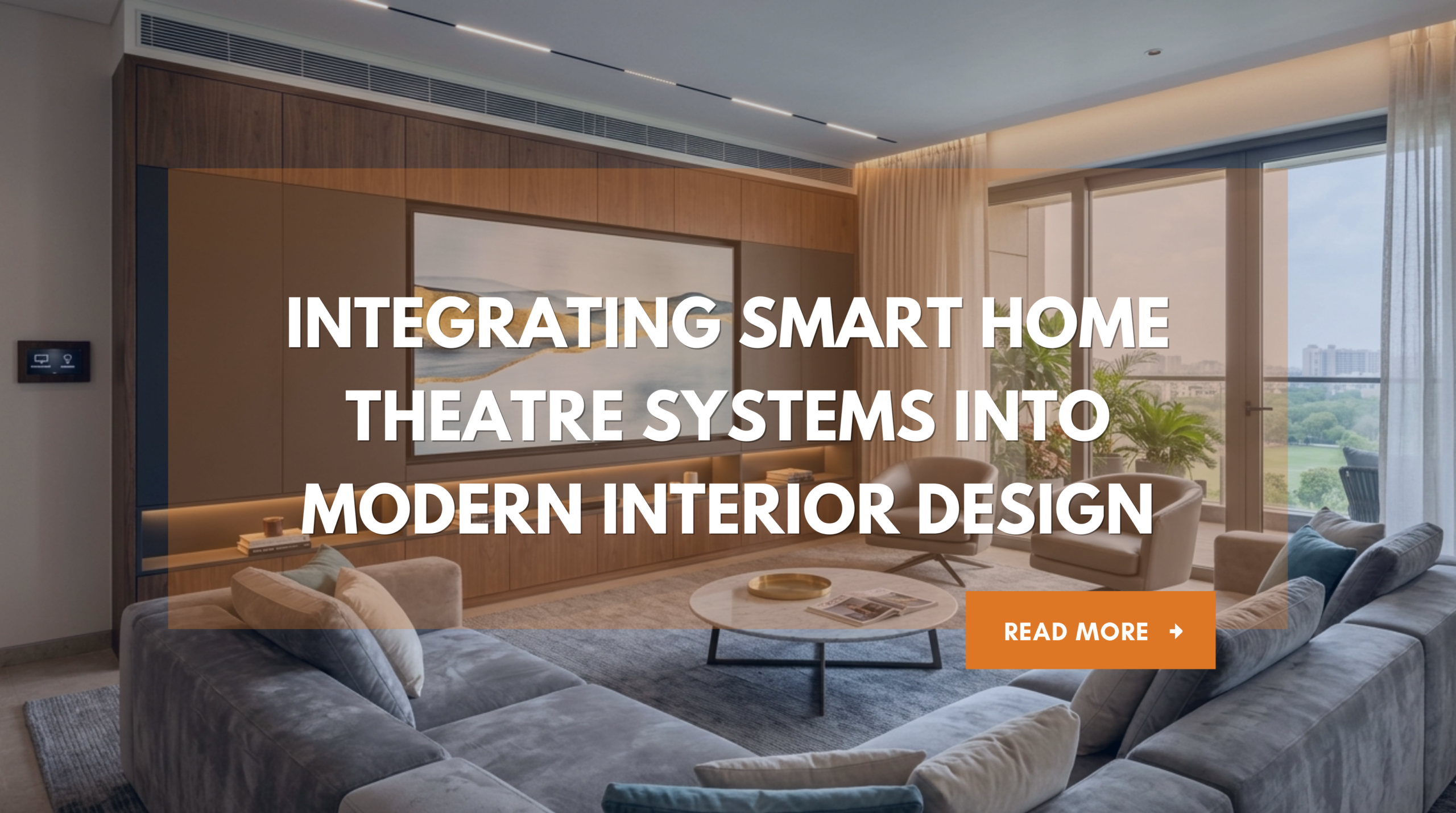
Home theaters aren’t just a bonus anymore; they’re showing up as must-haves in modern luxury homes. People want that big-screen, immersive experience, but they don’t want to mess up the vibe of their living spaces. So, blending a home theater into your interior design takes some real thought. You’ve got to think about acoustics, the right lighting, smart seating, and, of course, automation. With smart home theatre systems, you can handle the lights, the sound, and all your gear from one place. It makes everything feel smooth and easy. Get it right, and your home theater turns into a real showpiece.
In this guide, we’ll look at how interior designers can build smart home theater systems into today’s spaces, keeping things stylish, comfortable, and packed with the latest tech.
The Growing Demand for Smart Home Theatre Systems in Luxury Homes
Modern homes are evolving to include dedicated entertainment spaces. With the rise of streaming platforms and high-definition audiovisual technology, homeowners increasingly want cinematic experiences in their homes.
A well-designed home theatre allows residents to enjoy movies, sports, and other entertainment in a comfortable, immersive environment.
For interior designers, integrating smart home theatre systems involves balancing technology, acoustics, lighting, and interior aesthetics to create a seamless entertainment space.
Planning the Home Theatre During the Design Stage
One of the most important steps in integrating smart home theatre systems is planning it early in the interior design process.
Early planning helps designers determine:
- Ideal room layout and seating arrangements
- Placement of projectors or display screens
- Acoustic treatment and sound insulation
- Lighting control for cinematic experiences
Planning the home theatre at the design stage ensures that the technology integrates smoothly with the interior layout.
Choosing the Right Space for a Home Theatre
Selecting the right location within the home is crucial for creating an immersive theatre experience.
Home theatres are often installed in:
- Dedicated media rooms
- Basements or lower-level spaces
- Large family entertainment rooms
Rooms with minimal external noise and controlled lighting conditions provide the best environment for home theatre systems.
Interior designers can also enhance the experience by incorporating sound-absorbing materials and strategic layout planning.
Designing Comfortable Seating Layouts
Comfort plays a major role in home theatre design. Proper seating arrangements ensure that every viewer has a clear view of the screen and an optimal sound experience.
Interior designers often incorporate:
- Recliner seating arrangements
- Tiered seating for larger rooms
- Plush sofas and lounge seating
The seating layout should also consider screen size and viewing distance to ensure an immersive visual experience.
Smart Lighting for Cinematic Atmosphere
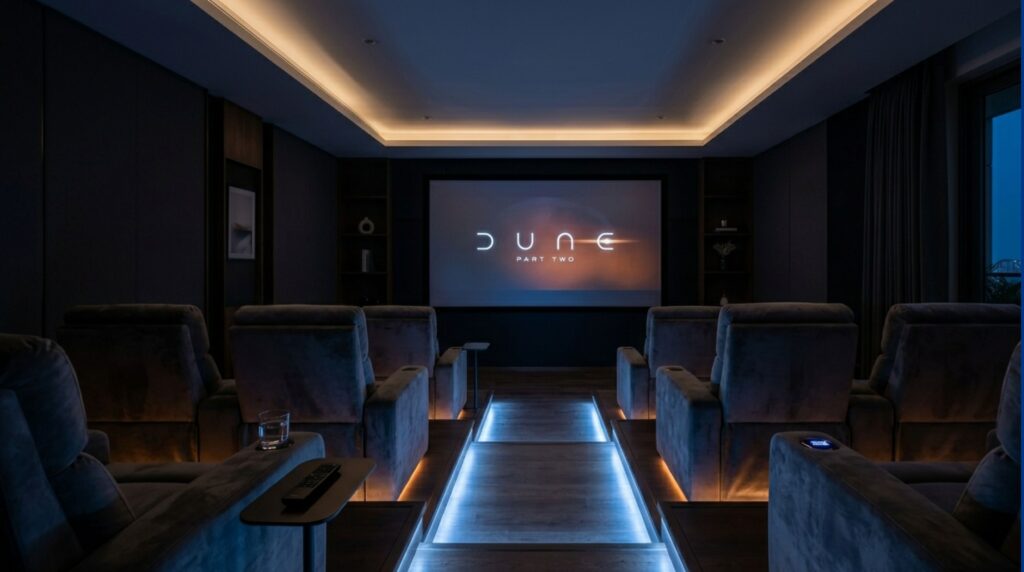
Lighting design is critical for home theatre environments. Smart lighting automation allows designers to create lighting scenes that enhance the viewing experience.
For example, lighting can automatically dim when a movie starts and gradually brighten when it ends.
Accent lighting can also be used along walls or floors to create a dramatic cinema-style ambience.
Automation allows homeowners to easily control lighting scenes via touch panels or mobile applications.
Acoustic Design and Sound Optimization
High-quality sound is essential for an authentic home theatre experience.
Interior designers often incorporate acoustic panels, sound-absorbing materials, and wall treatments to improve audio performance.
These elements help reduce sound reflections and ensure that audio remains clear and balanced throughout the room.
Good acoustic design ensures that smart home theatre systems deliver a professional cinema-like experience.
Integrating Smart Automation for Seamless Control
Automation plays a key role in modern home theatre systems. Instead of managing multiple remotes and switches, homeowners can control the entire entertainment system through a single interface.
Automation can control:
- Projectors and screens
- Surround sound systems
- Lighting scenes
- Curtains and blinds
With one command, the room can instantly switch to movie mode, where the lights dim, the curtains close, and the home theatre system activates.
Blending Technology with Interior Aesthetics
A major challenge in smart home theatre systems design is integrating advanced technology without compromising the interior’s visual appeal.
Interior designers often use creative solutions such as:
- Hidden speakers integrated into walls or ceilings
- Concealed wiring and equipment racks
- Minimalist display installations
These solutions ensure that the smart home theatre systems remain visually elegant while delivering powerful performance.
Creating Multi-Functional Entertainment Spaces
Not all homes have dedicated theatre rooms. Many homeowners prefer multi-functional entertainment areas that serve multiple purposes.
Interior designers can create flexible spaces where living rooms or lounges transform into entertainment zones when needed.
Automation systems allow these spaces to shift instantly between normal lighting settings and cinema environments.
This flexibility makes smart home theatre systems accessible even in compact homes.
Enhancing the Value of Luxury Homes
Integrating a well-designed home theatre adds significant value to luxury residential properties.
Homebuyers increasingly seek homes with premium lifestyle features, such as entertainment spaces and smart automation systems.
A professionally designed home theatre enhances the property’s overall appeal and improves the living experience.
Final Thoughts
Smart home theatre systems have become a key feature in modern luxury homes. By carefully planning acoustics, lighting, seating, and automation systems, interior designers can create immersive entertainment spaces that complement the home’s overall design.
Smart automation makes it easier to control multiple systems and transform ordinary rooms into cinematic environments.
When technology and design work together seamlessly, home theatres become one of the most enjoyable and valuable features of modern residential interiors.
Upgrade Home Entertainment with Smart Home Theatre Solutions
Modern luxury homes deserve immersive entertainment experiences that combine advanced audiovisual technology with intelligent automation. Smart home theatre systems allow homeowners to control lighting, sound, screens, and ambience through a single integrated platform.
Techtastic Technologies designs and installs smart home theatre systems along with advanced smart home automation powered by KNX technology.
Contact Techtastic today at 9769145145 to explore custom smart home theatre solutions for luxury homes and modern residential projects.
Collaboration Opportunities for Builders and Architects
Developers, architects, and interior designers can enhance residential projects by integrating home theatre systems and smart automation during the planning and design stages.
Techtastic collaborates with industry professionals to ensure automation technology integrates seamlessly with architectural layouts, electrical infrastructure, and interior design concepts.
Partner with Techtastic to implement home theatre and smart automation solutions for your upcoming residential projects.
We’ve handpicked these related articles to help you understand more about smart theatre installations.