
Summary
Today’s homeowners want more than just good looks; they want homes that actually work for them. Smart home integration for interior designers provides the tools to turn ordinary rooms into spaces that feel both beautiful and effortless to live in. Think about things like smart lighting, curtains that open themselves, climate control that always gets it right, and entertainment systems you can manage with a tap. These features don’t just look cool; they actually make life easier, adjusting to your habits without you having to think about it. The trick is to plan for this tech right from the start, so everything—furniture, light, and even the architecture- works together smoothly.
In this guide, you’ll see how smart automation integration for interior designers makes homes feel more comfortable, luxurious, and, honestly, just easier to enjoy every single day.
The Shift Toward Smart Living
Interior design is no longer limited to selecting materials, furniture, and color palettes. Today’s luxury homes are expected to offer intelligent technology that enhances the overall living experience.
Smart home automation allows homeowners to control multiple systems such as lighting, climate, entertainment, and security from a single platform.
For interior designers, this technology presents an opportunity to create living environments that feel modern, efficient, and highly personalized.
By integrating automation into interior planning, designers can elevate both the functionality and lifestyle appeal of a home.
Designing Spaces Around Smart Lighting
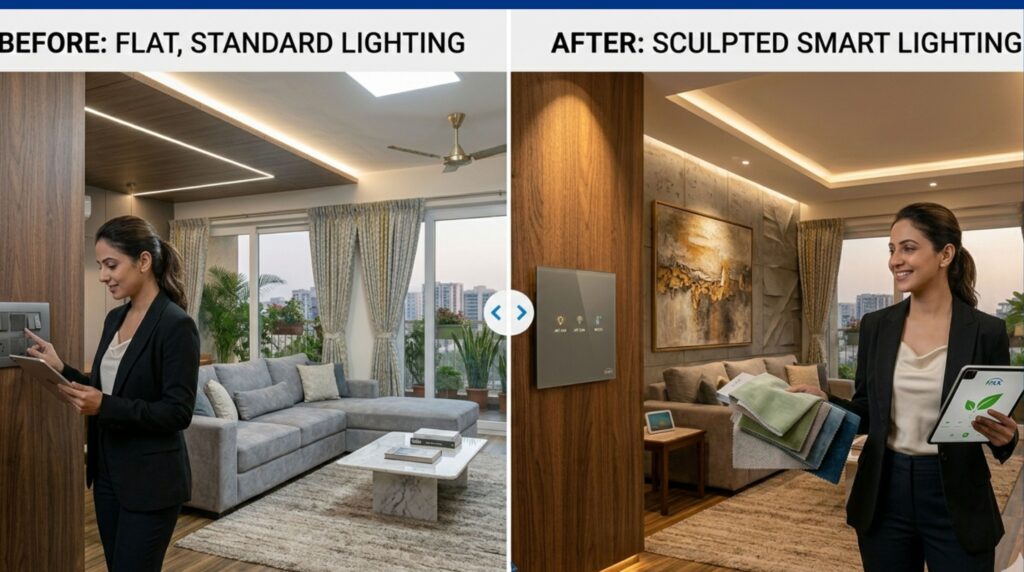
Lighting is one of the most important elements in interior design. Smart home integration for interior designers allows them to create dynamic lighting environments that adapt to different activities.
Smart home integration for interior designers helps design lighting scenes that suit various moments throughout the day, such as:
- Soft lighting for relaxation
- Bright lighting for workspaces
- Ambient lighting for dining areas
- Accent lighting to highlight design features
These lighting scenes can be activated through touch panels or mobile applications, giving homeowners greater control over their environment.
Smart lighting also helps reduce energy consumption by automatically turning off lights when rooms are unoccupied.
Integrating Motorized Curtains and Window Treatments
Window treatments are a major design element in luxury interiors. Smart home integration for interior designers allows curtains and blinds to operate automatically based on schedules or sunlight levels.
Motorized curtains enhance both convenience and aesthetics. Homeowners can control natural lighting without manually adjusting curtains throughout the day.
Interior designers can coordinate curtain automation with lighting systems so that indoor lighting adjusts when natural light changes.
This smart home integration for interior designers helps maintain balanced lighting conditions while enhancing the visual harmony of interior spaces.
Creating Comfortable Living Environments with Climate Automation
Comfort is a key component of smart living. Automated climate systems keep homes at optimal temperatures throughout the day.
Climate automation can adjust heating and cooling systems based on occupancy, schedules, or environmental conditions.
Smart home integration for interior designers helps reduce the number of visible thermostats and wall controls. Climate settings can be managed through centralized control panels, allowing designers to maintain clean and minimal wall designs.
Designing Smart Entertainment Spaces
Modern homes often include entertainment areas such as media rooms, family lounges, or private home theatres.
Automation systems allow these spaces to transform instantly into immersive entertainment environments.
For example, activating a movie mode can automatically dim the lights, close the curtains, and start the home theatre system.
Interior designers can design entertainment spaces that combine advanced technology with comfortable seating layouts and refined aesthetics.
Integrating Security Systems into Interior Design
Security technology is becoming an essential part of modern homes. Smart home integration for interior designers allows security features to integrate seamlessly with interior layouts.
These features may include:
- Video door phones
- Smart door locks
- Surveillance cameras
- Motion sensors and alarm systems
Interior designers can work with automation experts to ensure these devices are positioned strategically while maintaining a clean visual appearance.
Automation also allows homeowners to remotely monitor security systems on mobile devices.
Simplifying Control Through Centralized Systems
One of the biggest benefits of smart home integration for interior designers is centralized control.
Instead of using multiple switches and remotes, homeowners can manage lighting, climate, security, and entertainment systems through a single interface.
Control options may include:
- Wall-mounted touch panels
- Mobile applications
- Voice-enabled systems
For interior designers, centralized control reduces wall clutter and helps maintain elegant, minimal interiors.
Planning Smart Homes During the Design Phase
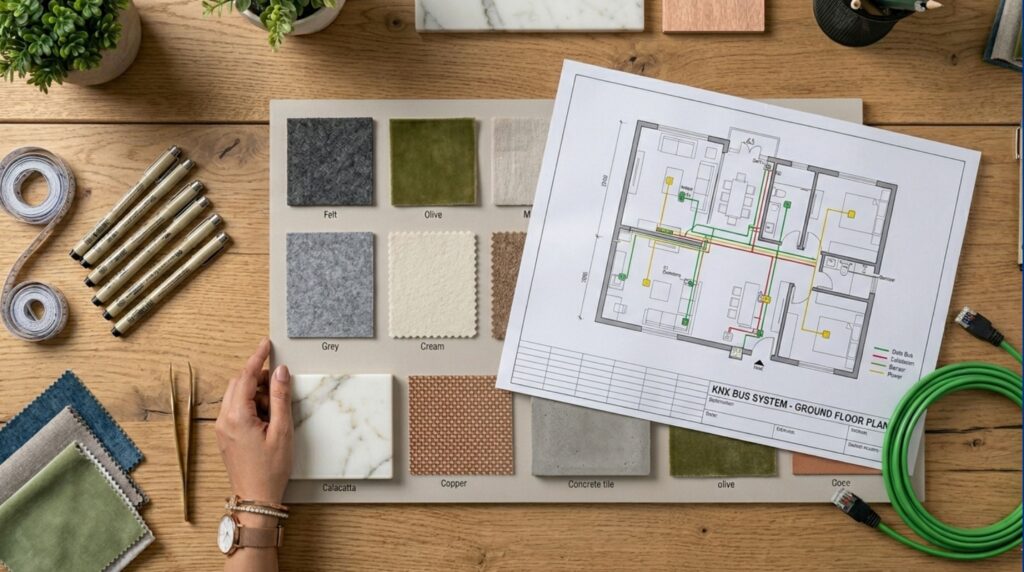
The most successful smart homes are created when automation is planned during the early stages of interior design.
Early planning allows designers to coordinate lighting layouts, wiring infrastructure, and device placement with the overall design concept.
Working closely with automation professionals ensures that technology integrates seamlessly into the home without disrupting the design vision.
This collaboration allows designers to create interiors where technology supports the living experience rather than dominating it.
The Future of Smart Home Integration for Interior Designers
Smart living experiences are becoming a defining feature of modern luxury homes.
Interior designers who understand automation technology can create spaces that respond intelligently to the needs of homeowners.
Smart lighting, climate automation, integrated entertainment systems, and intelligent security solutions all contribute to a more comfortable and efficient lifestyle.
As technology continues to evolve, smart home integration for interior designers will play an even greater role in shaping the future of residential interior design.
Final Thoughts
Interior designers play a key role in shaping how homeowners experience their living spaces. Through smart home integration for interior designers, they create homes that combine luxury aesthetics with intelligent functionality.
Smart living experiences enhance convenience, energy efficiency, comfort, and security while maintaining elegant interiors.
Homes designed with integrated automation systems deliver a superior lifestyle experience and represent the future of modern residential design.
Upgrade Residential Interiors with Smart Home Automation
Modern homes require intelligent automation systems that enhance comfort, security, and energy efficiency. Smart home automation allows homeowners to control lighting, climate systems, security, and entertainment through a single integrated platform.
Techtastic Technologies designs and installs advanced smart home automation systems powered by KNX technology for luxury residential interiors.
Contact Techtastic today at 9769145145 to explore smart home automation solutions for modern residential projects.
Collaboration Opportunities for Builders and Architects
Developers, architects, and interior designers can enhance residential projects by integrating smart automation systems during the planning and design stages.
Techtastic collaborates with industry professionals to ensure automation technology integrates seamlessly with architectural layouts, electrical infrastructure, and interior design concepts.
Partner with Techtastic to implement smart home automation solutions for your upcoming residential projects.