
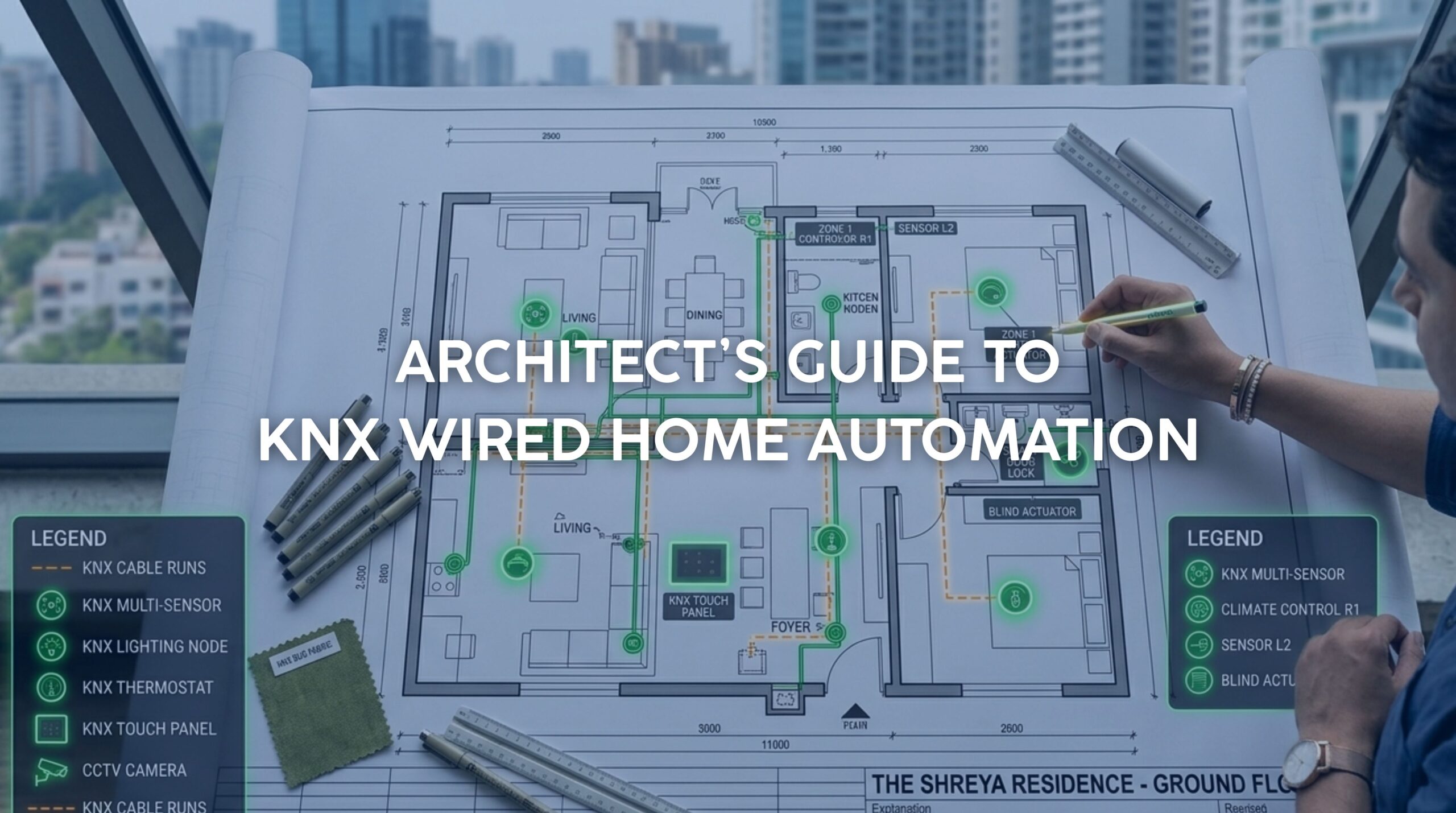
KNX Wired home automation is catching the eye of architects working on high-end homes. It’s just more reliable than wireless setups, everything runs smoother, and it’s a lot easier to scale up if the house is big or the tech needs grow over time. When architects plan for automation from the start, they ensure that lighting, climate, security, and entertainment systems all communicate without a hitch. Platforms like KNX pull everything together on one central network, so you don’t end up with a mess of different controls.
In this guide, we’ll dig into how KNX wired home automation actually works, why it’s such a good fit for luxury homes, and what architects should keep in mind to get the most out of it.
Understanding Wired Home Automation
Wired home automation refers to smart home systems that use dedicated cables to connect devices and controllers throughout a property.
Unlike wireless automation, which relies on Wi-Fi or radio signals, wired automation systems create a stable network in which devices communicate via structured wiring.
This allows multiple home systems to operate through a centralized automation platform.
A KNX wired home automation system can control various functions such as lighting, climate systems, security features, curtains, and entertainment systems.
For architects designing luxury homes, this technology offers reliability and flexibility that support advanced residential living.
Why Wired Automation Is Ideal for Modern Architecture
Luxury homes often include multiple rooms, outdoor areas, entertainment spaces, and security systems. Managing these systems efficiently requires a reliable automation infrastructure.
Wired automation systems are well-suited for large residential projects because they provide stable communication between devices.
Unlike wireless networks, wired systems are less affected by signal interference, connectivity issues, or bandwidth limitations.
This reliability ensures that homeowners experience smooth automation performance throughout the property.
The Role of KNX in Wired Automation
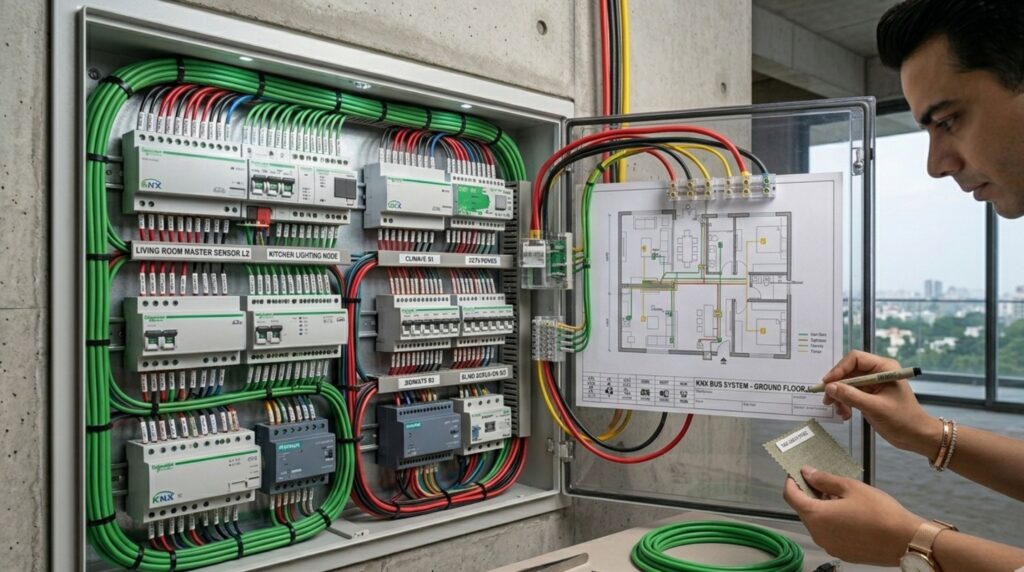
KNX is one of the most widely used standards for wired building automation around the world.
The platform allows multiple smart systems to communicate through a single automation network. Lighting systems, HVAC controls, security devices, and entertainment systems can all work together through KNX technology.
Because KNX follows an open standard, it supports devices from many different manufacturers. This flexibility allows architects to design customized automation solutions for residential projects.
KNX wired home automation is widely used in luxury homes, hotels, and commercial buildings because of its reliability and scalability.
Key Systems Architects Can Integrate with KNX Wired Home Automation
i. Smart Lighting Systems
Lighting automation is one of the most common applications of wired automation systems.
Architects can design lighting layouts that allow homeowners to create customized lighting scenes for different activities such as relaxing, dining, or entertaining.
Automation also enables lighting to respond automatically to occupancy sensors or daylight conditions.
ii. Climate Control Automation
Wired automation systems can manage heating, ventilation, and air conditioning systems throughout the home.
Automated climate control allows indoor temperatures to adjust based on occupancy schedules, room usage, or environmental conditions.
This improves comfort while helping reduce unnecessary energy consumption.
iii. Motorized Curtains and Blinds
Motorized curtains and blinds can be integrated into KNX wired home automation systems for seamless control of natural lighting and privacy.
These systems allow curtains to operate automatically based on time schedules or sunlight levels.
Architects can incorporate curtain automation into the overall design of windows and lighting systems.
iv. Security and Access Control
Security integration is another key advantage of KNX wired home automation.
Automation platforms can manage video door phones, smart door locks, surveillance cameras, and motion sensors within a unified system.
Homeowners can monitor and control these features through centralized control panels or mobile applications.
v. Home Theatre and Entertainment Systems
Luxury homes often include entertainment areas such as media rooms and home theatres.
Wired automation allows homeowners to control audiovisual equipment, lighting scenes, and curtains through a single interface.
For example, activating a movie mode can dim the lights, close the curtains, and activate the home theatre system automatically.
Planning Automation Infrastructure During Design
One of the most important aspects of KNX wired home automation is planning the infrastructure during the architectural design stage.
Early planning allows architects to coordinate wiring layouts, device placements, and control interfaces within the building structure.
This approach ensures that automation technology integrates seamlessly with the architectural design.
Proper planning also allows future expansion of automation features without major structural modifications.
Benefits of KNX Wired Home Automation for Luxury Residents
KNX Wired home automation offers several advantages for high-end residential projects.
i. Reliability
Wired systems provide consistent performance and are less prone to connectivity issues compared to wireless solutions.
ii. Scalability
Automation systems can be expanded in the future by adding new devices or features to the existing infrastructure.
iii. Long Term Stability
Wired networks are designed to operate reliably for many years, making them ideal for permanent residential installations.
iv. Seamless Integration
Automation devices can be integrated into walls, ceilings, and control panels without affecting interior aesthetics.
Collaboration Between Architects and Automation Experts
Integrating wired automation successfully requires collaboration between architects and automation professionals.
Automation experts help design the technical infrastructure, recommend appropriate systems, and ensure compatibility between different devices.
By working together during the early stages of a project, architects and automation specialists can create homes where technology enhances both functionality and design.
This collaboration ensures efficient installation and reliable long-term performance.
The Future of Wired Smart Homes
As smart technology continues to evolve, wired automation systems will remain an important foundation for intelligent homes.
Homeowners are increasingly seeking homes that offer seamless control, energy efficiency, and advanced security.
Wired automation platforms such as KNX provide the infrastructure needed to support these features while allowing homes to adapt to future technological developments.
Architects who integrate wired automation into residential designs can deliver homes that remain modern and functional for years to come.
Final Thoughts
KNX Wired home automation has become an essential component of modern luxury architecture. Its reliability, scalability, and seamless integration capabilities make it ideal for high-end residential projects.
By planning automation infrastructure during the design phase, architects can ensure that smart systems such as lighting, climate control, security, and entertainment operate efficiently.
Homes designed with wired automation infrastructure provide homeowners with intelligent living experiences while maintaining elegant architectural design.
Upgrade Luxury Homes with Advanced Wired Automation
Modern residential projects require reliable automation systems that enhance comfort, convenience, and energy efficiency. KNX Wired home automation allows homeowners to control lighting, climate systems, security, and entertainment through a single intelligent platform.
Techtastic Technologies designs and installs advanced smart home automation systems powered by KNX technology for luxury residential projects.
Contact Techtastic today at 9769145145 to explore wired home automation solutions for premium homes and modern residential developments.
Collaboration Opportunities for Builders and Architects
Developers, architects, and interior designers can enhance residential projects by integrating KNX wired home automation systems during the planning and design stages.
Techtastic collaborates with industry professionals to ensure automation technology integrates seamlessly with architectural layouts, electrical infrastructure, and interior design concepts.
Partner with Techtastic to implement wired home automation solutions for your upcoming residential projects.