
Summary
These days, homeowners want more than just a good-looking house. They want something that feels smart, comfortable, safe, and energy efficient. That’s where smart home automation features for modern architecture come in; they let architects weave advanced tech right into the heart of a home. Think automated lighting, climate control, security systems, and even home theaters. These upgrades don’t just make life easier; they actually change how people live in their spaces. When architects suggest the right smart features from the get-go, clients end up with homes that keep up as technology moves forward. So, let’s dive into the top automation features architects should bring up when planning modern luxury homes.
Integrating Smart Home Automation Features For Modern Architecture
Architecture today goes beyond designing aesthetically pleasing homes. Clients now expect homes that provide convenience, efficiency, and advanced technology.
Smart home automation enables homeowners to control multiple systems such as lighting, temperature, security, and entertainment through centralized platforms.
For architects, recommending the right automation features during the design stage ensures seamless integration between technology and architectural design.
This approach helps create homes that are both elegant and highly functional.
Smart Lighting Automation
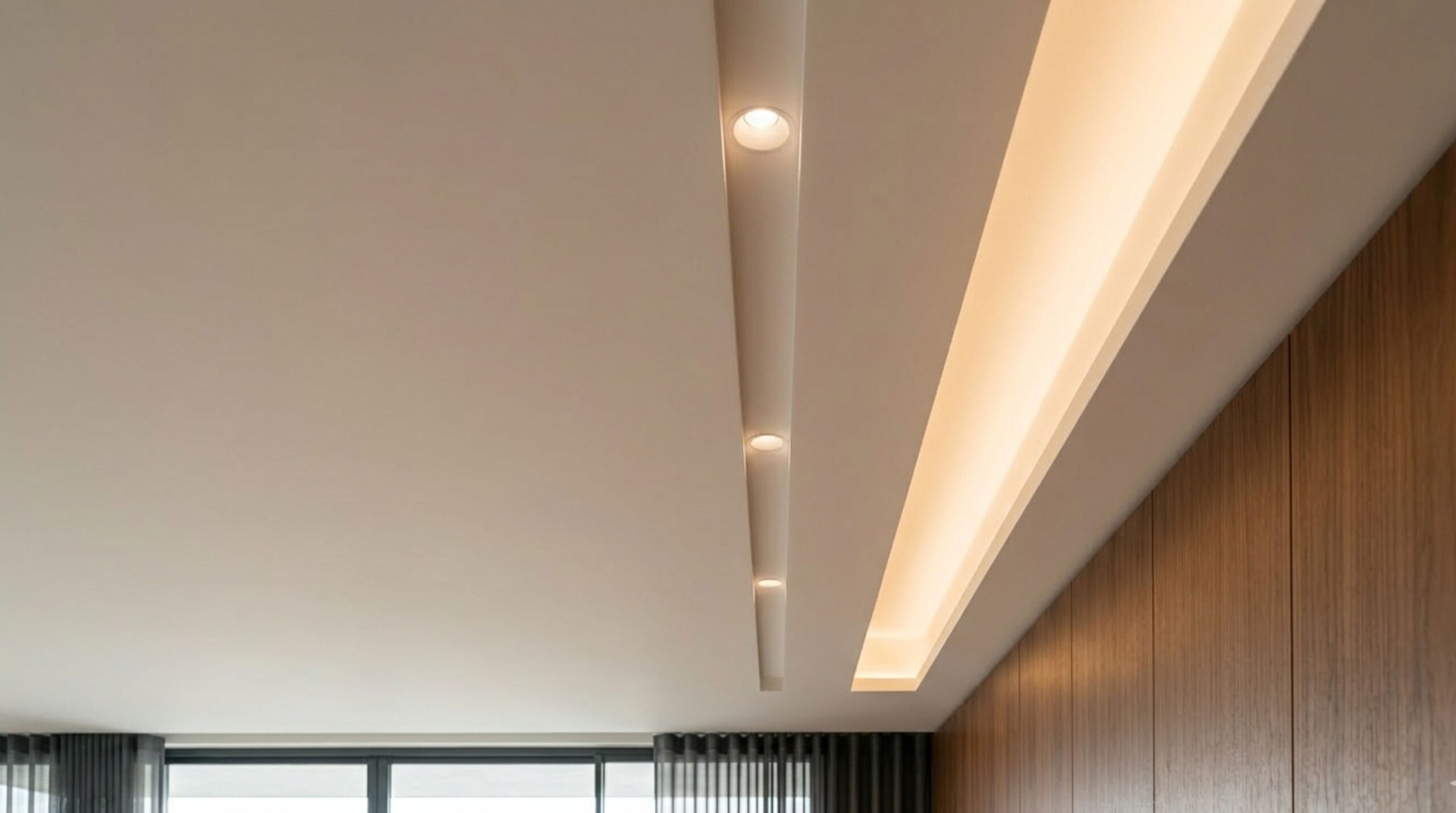
Lighting is one of the most impactful elements in residential design. Smart lighting automation allows homeowners to control brightness levels, color tones, and lighting scenes throughout the home.
Architects should recommend smart lighting systems that allow clients to:
- Create lighting scenes for different moods
- Automatically adjust lighting based on occupancy
- Control lighting through mobile devices or touch panels
- Schedule lighting based on daily routines
Smart lighting enhances ambience while also improving energy efficiency.
Motorized Curtains and Blinds
Automated curtains and blinds are becoming a popular feature in luxury homes. These systems allow homeowners to control natural lighting and privacy with ease.
Curtains can automatically open in the morning and close in the evening based on schedules or sunlight levels.
When integrated with lighting systems, curtains can help maintain balanced lighting conditions throughout the day.
For architects, curtain automation enhances both functionality and interior aesthetics.
Climate Control Automation
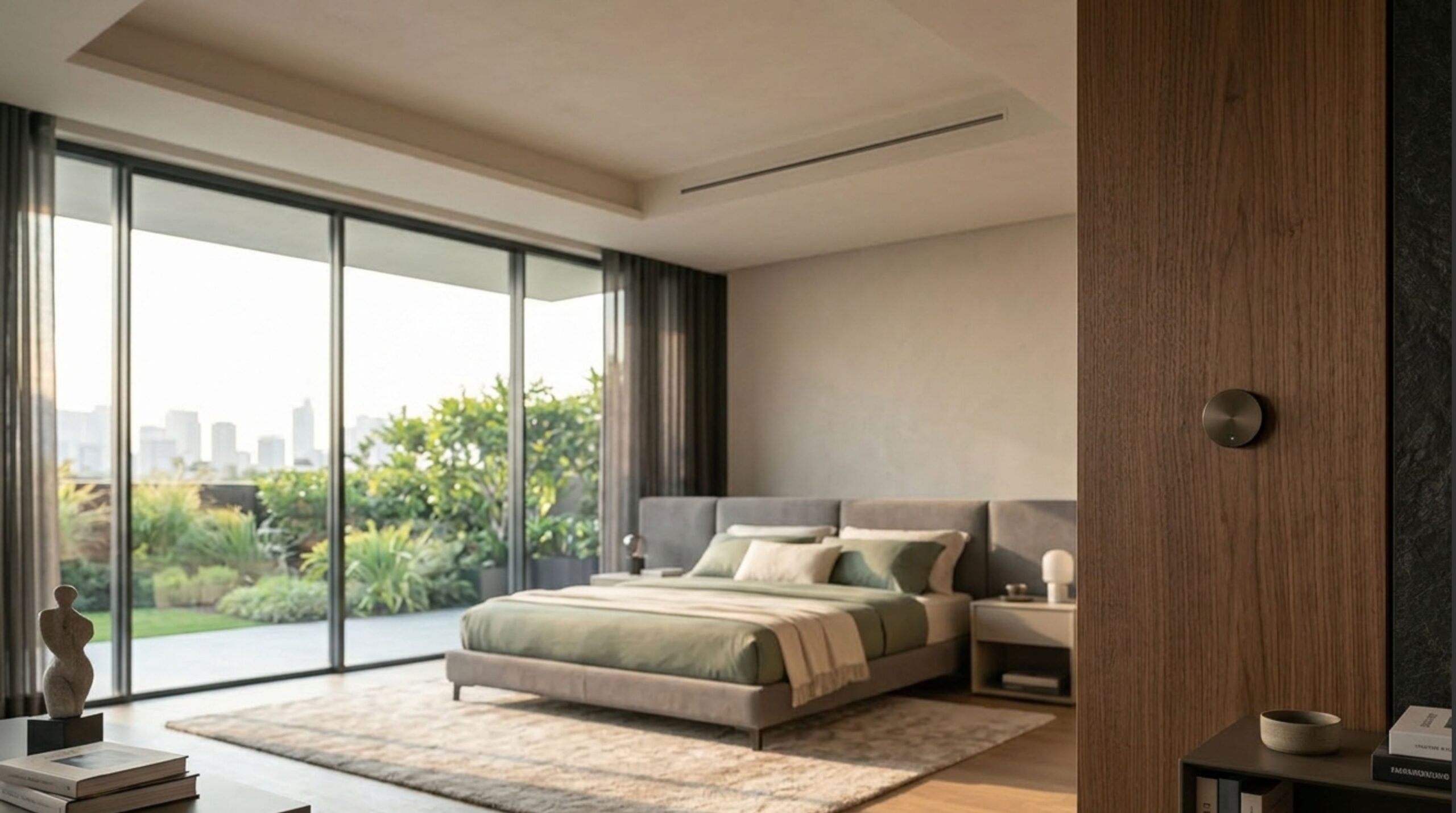
Comfort is a key priority for homeowners, especially in larger residential properties.
Smart climate control systems allow heating and cooling systems to adjust automatically based on occupancy, time schedules, or temperature settings.
These systems help maintain ideal indoor conditions while reducing energy consumption.
Architects can also reduce the number of visible thermostats by integrating climate control into centralized automation systems.
Smart Security Systems
Security is one of the most important considerations for homeowners. Automation platforms allow security features to be integrated into a unified system.
Key security features architects should recommend include:
- Video door phone systems
- Smart door locks
- CCTV surveillance systems
- Motion sensors and alarm systems
These smart home automation features for modern architecture allow homeowners to monitor their property remotely through mobile applications.
Security devices can also be positioned strategically to blend with architectural design.
Integrated Home Theatre Systems
Entertainment spaces are a common feature in luxury homes. Dedicated media rooms and home theatres are becoming increasingly popular smart home automation features for modern architecture.
Automation systems allow homeowners to control audiovisual equipment, lighting, and curtains through a single command.
For example, activating movie mode can dim the lights, close the curtains, and start the home theatre system.
Architects can design spaces that support immersive entertainment experiences while maintaining visual harmony.
Centralized Control Panels
One of the biggest advantages of smart home automation features for modern architecture is centralized control.
Instead of using multiple switches and remotes, homeowners can manage different systems from a single interface.
Common control options include:
- Wall-mounted touch panels
- Smartphone applications
- Voice control systems
Centralized control simplifies the user experience and reduces clutter on walls.
For architects, this helps maintain clean and minimal interior designs.
Energy Management Systems
Energy efficiency is becoming an important factor in residential architecture.
Automation systems can monitor and optimize energy usage across lighting, climate systems, and appliances.
For example, automation can turn off unused lighting, adjust temperature settings automatically, and regulate curtain positions to reduce heat gain from sunlight.
These smart home automation features for modern architecture support sustainable living while reducing energy costs.
Outdoor Automation
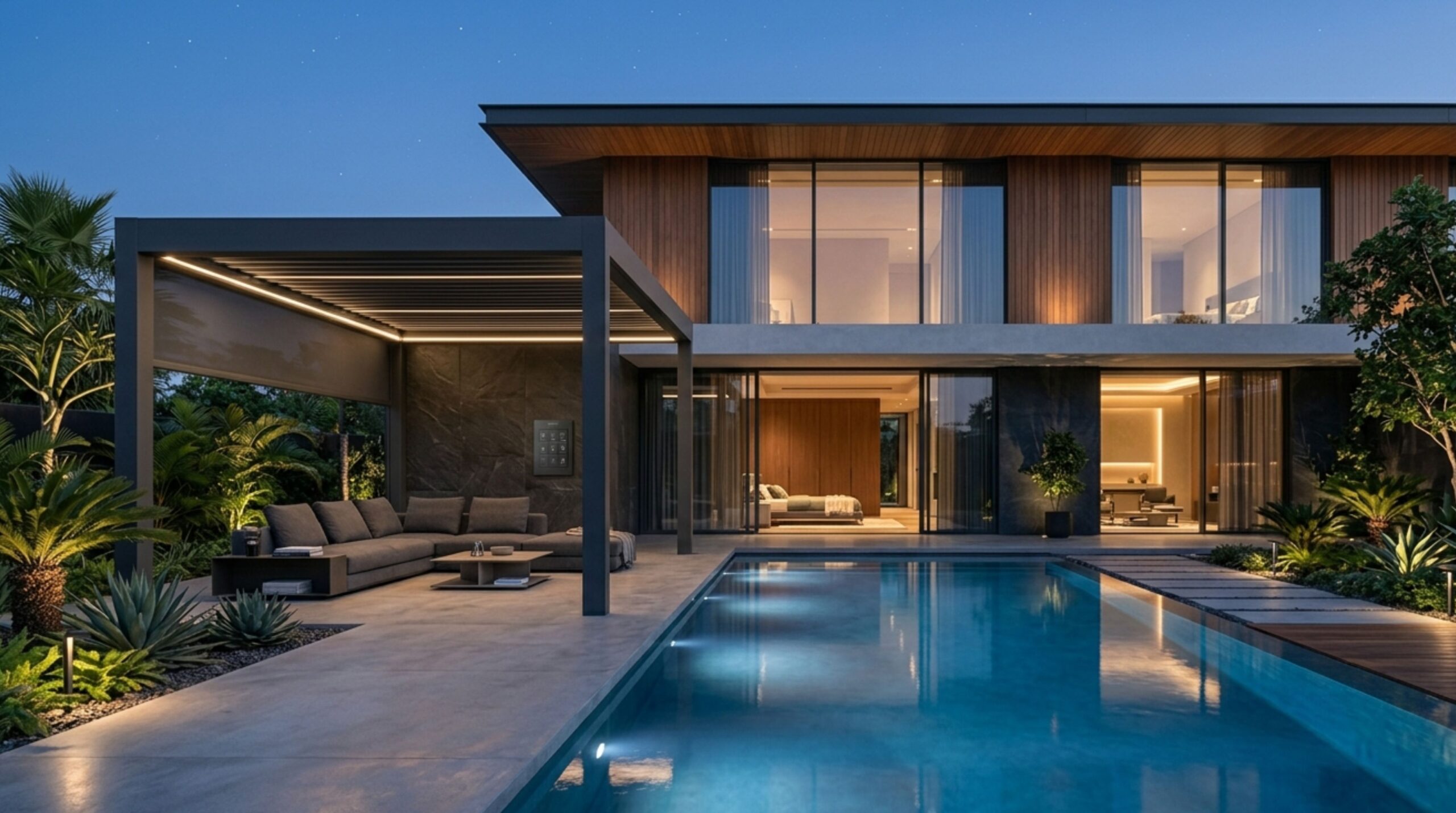
Automation is not limited to indoor spaces. Architects can also recommend smart solutions for outdoor environments.
Outdoor automation may include:
- Automated landscape lighting
- Smart irrigation systems
- Automated gates and access control
- Pool and garden automation systems
These features improve convenience while enhancing the functionality of outdoor living spaces.
Planning Automation During the Design Stage
To achieve the best results, automation should be planned during the early stages of architectural design.
Early planning allows architects to coordinate wiring infrastructure, device placement, and control systems without affecting the visual design.
Working with automation specialists during the planning phase ensures that all systems integrate seamlessly.
This approach helps avoid costly modifications later in the construction process.
Enhancing Property Value with Smart Features
Homes equipped with smart automation features often attract greater interest from buyers.
Automation improves convenience, security, and energy efficiency while creating a modern lifestyle experience.
Architects who recommend the right automation solutions help clients build homes that are not only beautiful but also technologically advanced and future-ready.
Final Thoughts
Smart home automation is rapidly becoming a standard feature in modern residential architecture. By recommending smart home automation features for modern architecture, such as smart lighting, climate control, security systems, and centralized control platforms, architects can create homes that deliver exceptional living experiences.
Automation enhances comfort, convenience, and efficiency while supporting elegant architectural design.
Homes designed with smart home automation features for modern architecture are better prepared to adapt to evolving technologies and lifestyle expectations.
Upgrade Residential Projects with Smart Automation
Modern homes require intelligent automation systems that enhance comfort, security, and energy efficiency. Smart home automation allows homeowners to control lighting, climate systems, security, and entertainment through a single integrated platform.
Techtastic Technologies designs and installs advanced smart home automation systems powered by KNX technology for premium residential projects.
Contact Techtastic today at 9769145145 to explore smart home automation solutions for modern residential developments.
Collaboration Opportunities for Builders and Architects
Developers, architects, and interior designers can significantly enhance residential projects by integrating smart automation systems during the planning and design stages.
Techtastic collaborates with industry professionals to ensure automation technology integrates seamlessly with architectural layouts, electrical infrastructure, and interior design concepts.
Partner with Techtastic to implement smart home automation solutions for your upcoming residential projects.